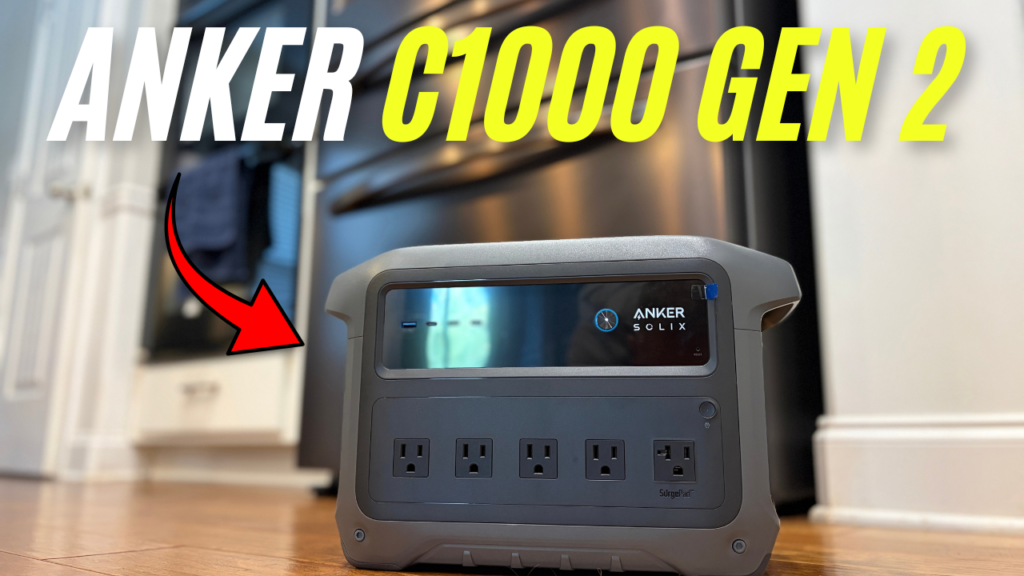
Anker SOLIX C1000 Gen2 Review
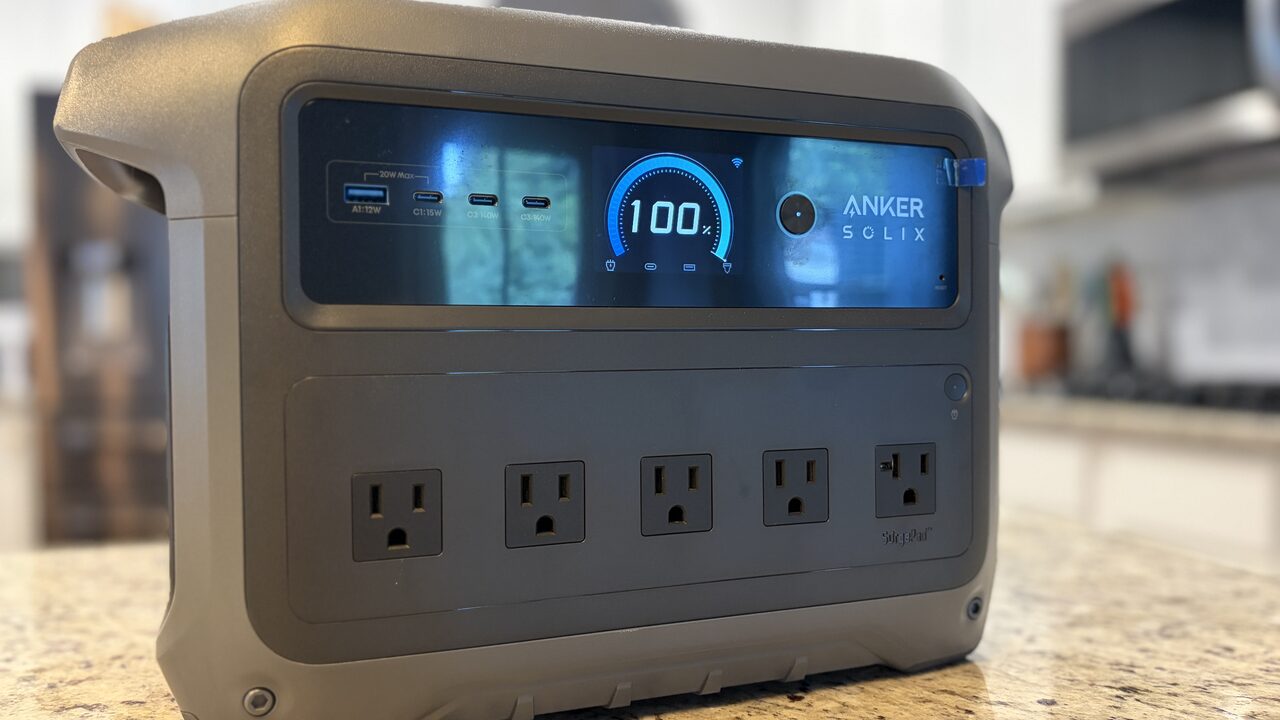
A 1,024Wh, 2,000W power station that recharges fully in 49 minutes and switches to battery in 10 milliseconds during an outage. We put it through real household loads to see where it earns that reputation — and where it doesn’t.
01The short version
What it gets right
- Recharges from empty in well under an hour, which changes how you actually use a power station day-to-day
- 2,000W continuous output runs real appliances, not just phones and laptops
- 10ms UPS switchover means CPAP machines, routers, and desktops don’t drop out during a grid blip
- App control is genuinely useful — remote monitoring, scheduling, and outage alerts, not a gimmick tacked on for the box copy
Who it’s for
- Homeowners who want circuit-level backup for the essentials during an outage
- Campers, van-lifers, and tailgaters who need real appliance power, not just USB juice
- Anyone who’s been burned by a power station that takes all afternoon to recharge
02What it can actually power
Spec sheets list watts, but most people shopping for a power station are really asking one question: what will this keep running, and for how long? Here’s how 1,024Wh and 2,000W translate into real devices.
| Device | Typical draw | Approx. runtime |
|---|---|---|
| CPAP machine (with humidifier) | 40W | ~18 hours |
| Laptop + monitor | 90W | ~9 hours |
| Mini fridge / wine cooler | 70W avg | ~12 hours |
| Full-size refrigerator | 150–200W avg | ~5–6 hours |
| Sump pump (running) | 800–1,300W | ~45–70 min continuous |
| Space heater / hair dryer | 1,500W | ~35–40 min |
| Circular saw / power tools | 1,200–1,800W | Well within the 2,000W ceiling |
Runtimes are estimates based on rated capacity and typical appliance draw, and assume steady load — actual results vary with efficiency losses, temperature, and how the app’s power modes are configured.
03Recharge speed is the real headline
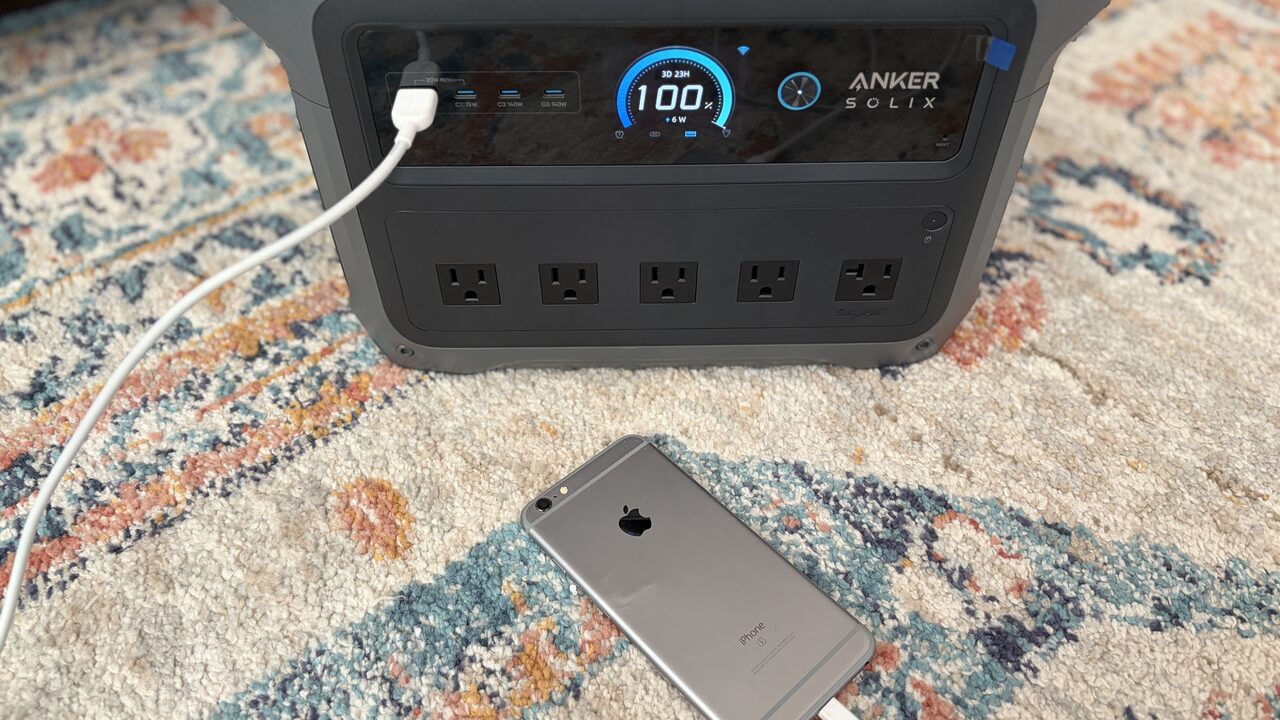
Most 1kWh-class power stations take two to four hours to refill from a wall outlet. The C1000 Gen2’s UltraFast mode pulls up to 1,600W of AC input and gets from flat to full in 49 minutes — fast enough that it earned a Guinness World Records certification for the category. Standard AC charging tops out at 1,200W if you’d rather not push the battery that hard every time.
That speed matters more than it looks like on paper. A power station that recharges in under an hour can realistically be topped off between outages, between camping trips, or during a lunch break — instead of sitting half-charged because a four-hour charge never fit the schedule. UltraFast mode has to be switched on manually in the Anker app, and Anker recommends using it only when you need the speed, to keep long-term battery wear in check.
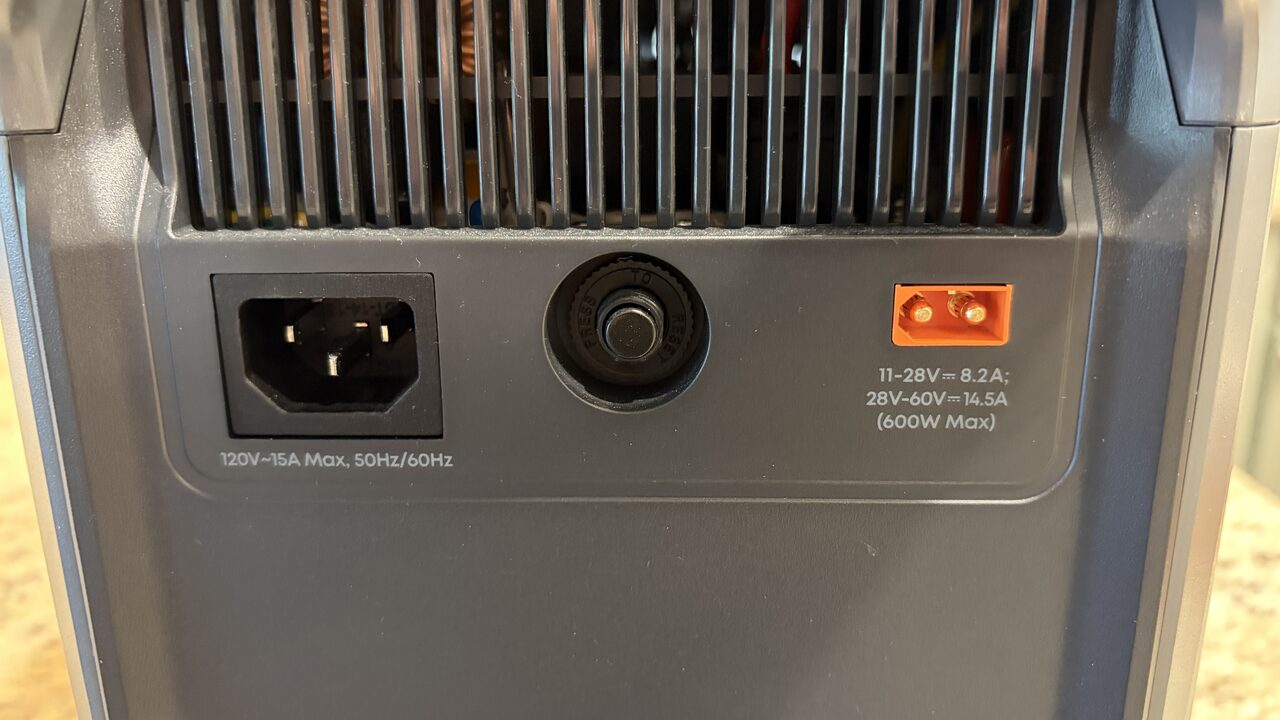
Solar input tops out at 600W, which gets a full recharge in about 1.8 hours in good sun — useful for extended off-grid stretches, though most owners will lean on the wall outlet for routine charging and save solar for when the grid isn’t an option.
04Backup power that doesn’t blink
The UPS switchover — 10 milliseconds — is fast enough that connected equipment doesn’t register the transition when the grid drops. For CPAP users, that’s the difference between a seamless night and waking up gasping when the power flickers. For a desktop or a home network, it means no forced reboot mid-task.
The Anker app adds a few features worth using rather than ignoring: Time-of-Use mode schedules charging around off-peak utility rates, Storm Guard automatically tops off the battery ahead of a forecasted outage, and Backup Mode keeps a reserve charge set aside specifically for emergencies rather than letting daily use drain it. None of this is essential to using the unit, but it’s the kind of software support that makes the hardware more useful over time instead of static.
05The one real limitation
No external battery expansion
Some power stations in this size class — including earlier Anker models — let you plug in a satellite battery to double or triple total capacity as your needs grow. The C1000 Gen2 doesn’t have that port. What you buy is what you have: 1,024Wh, full stop.
In practice, this matters less than it sounds for most buyers. If your use case is CPAP backup, a home office during outages, or weekend camping, 1,024Wh with a 49-minute recharge is arguably more useful than double the capacity with a slow refill — you’re rarely waiting on the battery. Where it does matter is multi-day off-grid stretches or whole-home backup ambitions, where you genuinely need more stored energy and no wall outlet to refill from. If that’s your scenario, it’s worth looking at Anker’s larger SOLIX lineup or a model built around expansion batteries from the start, rather than expecting to grow into this one.
06Full specs
07Who should buy it
Good fit
- You want fast, reliable backup for a handful of essential circuits or devices
- You’d rather recharge quickly and often than carry around unused capacity
- You camp, tailgate, or work remotely and need real appliance-level power
- You care about app-based monitoring and scheduling, not just raw hardware
Look elsewhere
- You want whole-home backup or multi-day off-grid capacity
- You expect to scale up capacity later with an add-on battery
- Your primary loads regularly exceed 2,000W continuous
08Common questions
Is it safe to run indoors?
Yes — unlike a gas generator, it has no combustion or exhaust, so there’s no carbon monoxide risk. It’s a sealed battery and inverter, safe for indoor use in a living room, office, or bedroom the way you’d treat any other electronics.
Does it make noise?
At idle or light loads it’s close to silent. Under heavy draw or during UltraFast recharging, an internal fan spins up to manage heat — noticeable in a quiet room, but well within the range of a typical space heater or window AC unit, not disruptive for CPAP use or overnight charging in another room.
Can this replace a whole-home generator?
No, and it isn’t trying to. Think of it as circuit-level backup for the things that actually matter during an outage — a fridge, a CPAP, a router, a few lights — rather than a replacement for a transfer-switch generator running your whole panel.
How long will the battery actually last?
Anker rates the LFP battery for 4,000 charge cycles to 80% capacity, which at roughly one cycle a day works out to close to a decade of daily use before you’d notice meaningful capacity loss. It’s backed by a 5-year warranty.
Is the fast recharge hard on the battery long-term?
UltraFast mode has to be manually enabled in the app rather than being the default, which is Anker’s way of putting the choice in your hands — use it when speed matters, and let standard charging handle routine top-offs if you’d rather minimize heat cycling.
09Bottom line
The Anker SOLIX C1000 Gen2 does the fundamentals better than most power stations in its class: it recharges fast enough to actually fit into daily life, it handles real household loads without strain, its UPS switchover is quick enough to trust with sensitive equipment, and the app adds real functionality instead of padding a features list. The lack of expansion capability is a genuine limitation for anyone planning around future growth — but for the person who wants dependable, fast-cycling backup power today, it’s a minor trade-off against a lot of things done right.