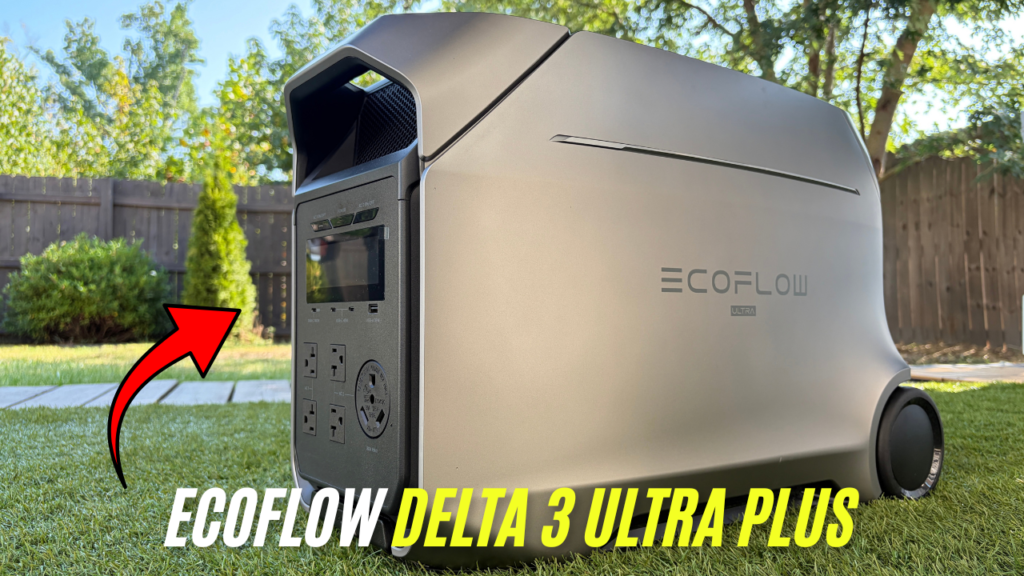
EcoFlow DELTA 3 Ultra Plus Review
A 3,072Wh beast with 3,600W continuous output, 30-amp DC capability, and a 48-minute fast recharge. We tested it with real household loads, in off-grid scenarios, and for expandability to see where this premium power station earns its reputation — and where it falls short.
01The short version
What it gets right
- 3,072Wh capacity with 3,600W output handles serious loads — full refrigerators, power tools, multiple devices at once
- 48-minute fast recharge keeps you from babysitting the battery between uses
- 30-amp Anderson DC output is a genuine pro-level feature for RVs, mobile setups, and off-grid installs
- Expandable design lets you double capacity later without replacing the entire unit
- 10ms UPS backup protects sensitive gear like CPAP machines and network equipment from grid blips
Who it’s for
- Off-grid homeowners who want serious battery storage and room to grow
- RV and van-lifers needing real appliance power with expandable capacity
- Anyone running power tools, workshop equipment, or multiple 120V loads simultaneously
- Folks who want honest-to-goodness backup without compromises on size
02What it can actually power
Three kilowatt-hours sounds abstract until you start plugging things in. Here’s how 3,072Wh and 3,600W translate into real appliances and realistic runtimes.
| Device | Typical draw | Approx. runtime |
|---|---|---|
| Full-size refrigerator | 150–200W avg | ~15–18 hours |
| Window AC unit (running) | 800–1,200W | ~2.5–3.5 hours continuous |
| Laptop + monitor | 90W | ~30+ hours |
| Microwave (2,000W cycle) | 2,000W | ~1.5 hours intermittent use |
| Electric kettle | 1,500W | ~2 hours |
| Table saw / circular saw | 1,500–1,800W | Well within the 3,600W ceiling |
| Two devices at once (e.g., microwave + coffee maker) | Combined 3,000W | Short bursts, within headroom |
Runtimes are estimates based on rated capacity and typical appliance draw — actual results vary with inverter efficiency, temperature, and load cycles. Intermittent use extends runtime significantly.
03Fast recharge and expandability: the design philosophy
Charging from zero to full in 48 minutes is genuinely rare at this capacity level. The DELTA 3 Ultra Plus pulls up to 3,500W of AC input — nearly ten times what a standard wall outlet provides — which means you can top off between use cases instead of planning around a four-hour charge window. Solar input maxes out at 1,200W, getting you a full recharge in roughly 2.5 hours in optimal sun, and multiple MPPT controllers mean you can run solar and AC input simultaneously without conflicts.
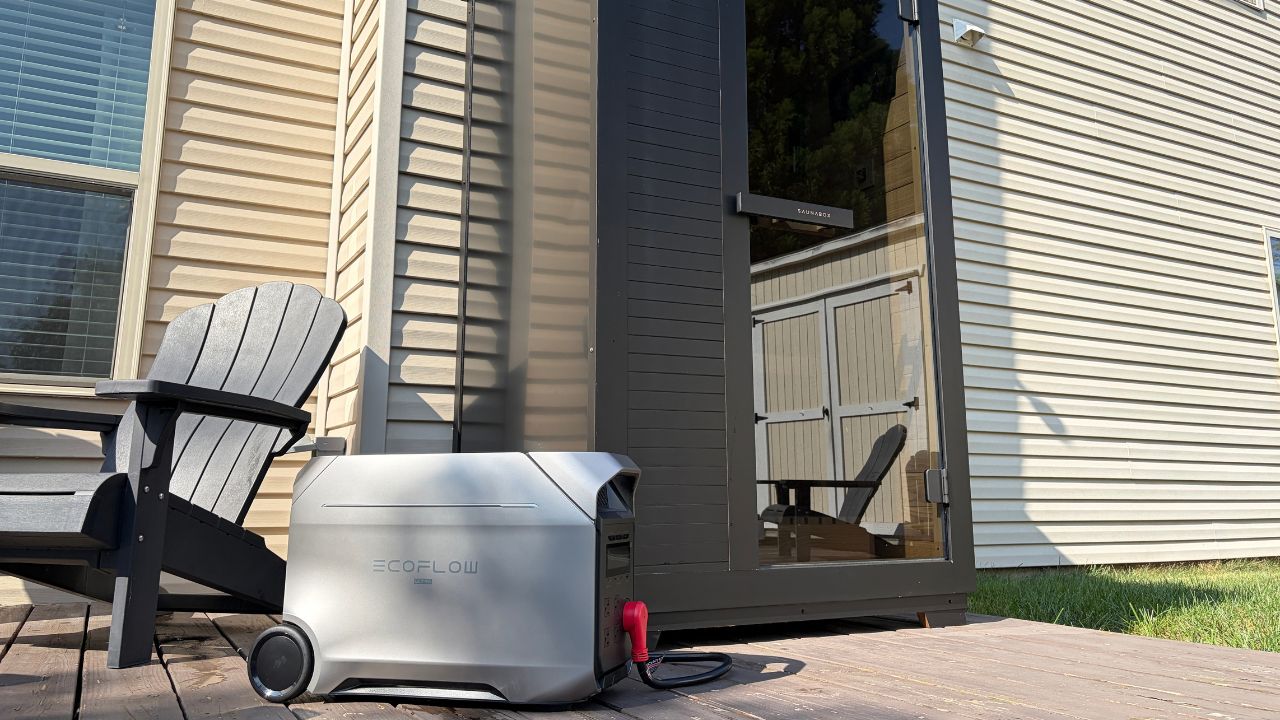
The real differentiator, though, is that you can add extra batteries. Buy an extra Delta 3 battery, plug it in, and your total capacity jumps to 6,144Wh. Want to go bigger? Stack more. This is the inverse of the “what you buy is what you have” philosophy — you scale as your needs grow, not upfront. For someone starting with weekend camping and eventually graduating to off-grid cabin living, that’s the difference between replacing the entire unit or just adding a module.
0430-amp DC output: a pro-level feature
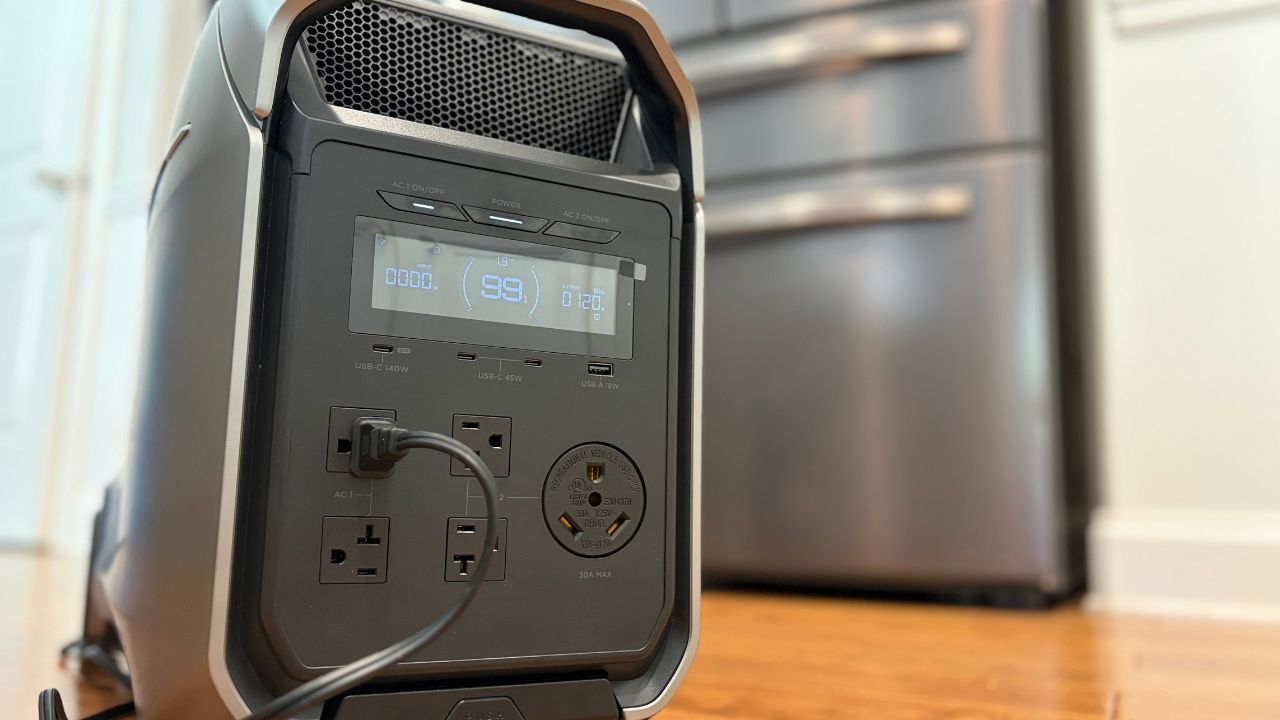
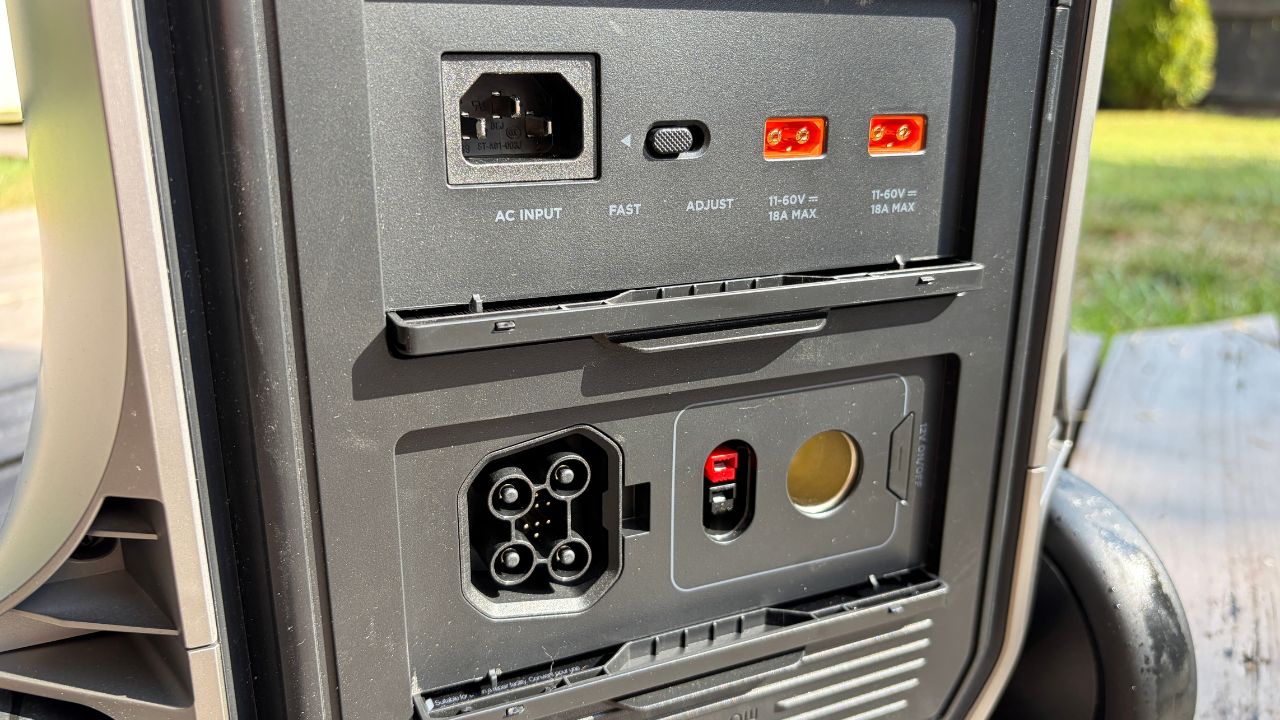
Most portable power stations bury DC output as an afterthought. The DELTA 3 Ultra Plus makes it a headline feature with a 30-amp Anderson connector that can reliably feed RV systems, solar charge controllers, marine installations, and heavy DC loads without the inefficiency of going through the inverter. At full output, that’s 3,600W of DC power, enough to charge a dead RV battery bank or run industrial equipment without stepping down through AC conversion losses.
This is the kind of spec that matters more to off-gridders and mobile living enthusiasts than casual campers, but if you’re serious about scaling beyond 120V AC convenience, this port is why you’re buying this unit instead of something smaller. For anyone building a solar system or running a mobile workspace, it’s not a nice-to-have — it’s the infrastructure you’d want anyway.
05DELTA 3 Ultra Plus vs. DELTA 3 Ultra: what’s different?
EcoFlow’s naming can be confusing — both units are serious, and both have their place. Here’s the real distinction:
| Feature | DELTA 3 Ultra Plus | DELTA 3 Ultra |
|---|---|---|
| Battery capacity | 3,072Wh | 3,072Wh (same) |
| AC continuous output | 3,600W | 3,600W (same) |
| DC output | 30-amp Anderson | Standard DC only |
| Fast recharge speed | 48 min | 60 min (slower) |
| Expandable battery | Yes — add modules | Not expandable |
| Price | Higher | Lower |
The bottom line: If you’re planning to grow your system, run off-grid for extended periods, or feed a solar array and RV setup, the Ultra Plus is the right call. If you want three kilowatt-hours of backup power for a cabin or as emergency home backup and don’t need to expand, the standard Ultra saves you money. The Ultra Plus isn’t better — it’s different, and it’s built for people who know they’ll want more capacity down the road.
06The 120V-only limitation
No true 240V output
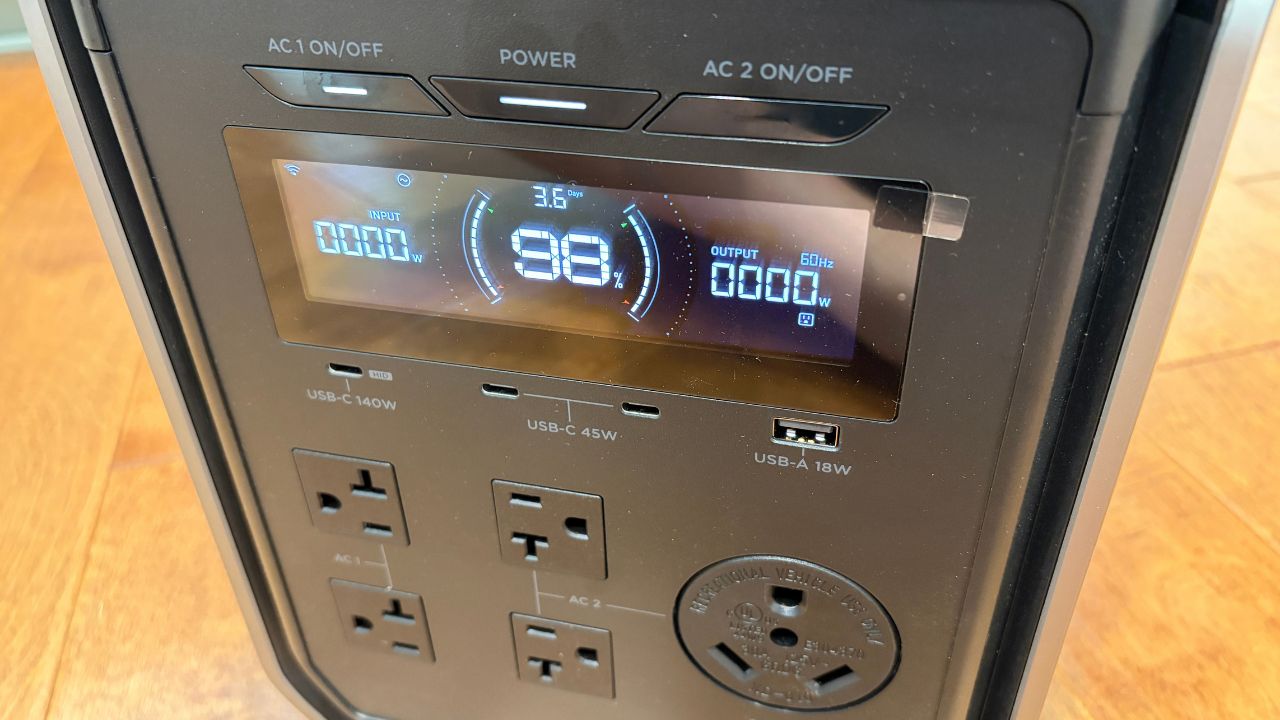
This is the tradeoff that separates the DELTA 3 Ultra Plus from true whole-home backup systems. It maxes out at 120V AC. If your essential equipment runs on standard 120V circuits — which most household appliances do — you’re fine. But if you have split-phase loads, electric vehicle chargers, or heavy-duty equipment that expects 240V supply, this won’t bridge that gap. You’d need a different approach for that use case.
In practice, it’s less of a gotcha than it sounds for most owners. The vast majority of homes can get by on 120V for essential circuits during an outage — fridge, lights, router, CPAP, charge banks. But it’s worth calling out explicitly: this is not a whole-home generator replacement with transfer-switch capability. It’s serious battery backup, not grid parity.
07Full specs
08Who should buy it
Good fit
- You want real capacity with the option to scale later without replacing the whole unit
- You’re running an RV, mobile workspace, or off-grid cabin and need DC power integration
- You care about fast recharge between uses and don’t want to babysit the battery all afternoon
- You value app control and the ability to manage circuits independently
Look elsewhere
- You need true 240V capability for split-phase equipment or EV charging
- You want something compact and lightweight for casual camping
- Your budget is tight and a smaller 1–2kWh unit would cover your needs
09Common questions
Can I really run my fridge all day on this?
Yes, easily. A typical refrigerator draws 150–200W average (less when the compressor isn’t running). 3,072Wh divided by 150W gives you roughly 18 hours, and that’s before accounting for efficiency. Real-world, you’re looking at a full day of continuous fridge operation with power to spare for lights and other loads.
How does the 30-amp DC output actually get used?
It connects directly to RV battery banks, solar charge controllers, and industrial DC equipment without inefficiency losses from AC conversion. If you’re running a solar installation or mobile system, this port is infrastructure you’d want anyway — the DELTA 3 Ultra Plus just integrates it properly instead of forcing you through the AC inverter.
Can I add batteries after I buy it?
Yes — that’s the whole point of the expandable design. Purchase an additional Delta 3 battery module and connect it to the expansion port. Your capacity doubles, and you only replace the extra module if one ever fails, not the entire unit. It’s a smart approach for staged growth.
Is the 48-minute recharge as good as it sounds?
It’s genuine and changes how you actually use the device. Most power stations take 3–4 hours, which means you plan around them. At 48 minutes, you can realistically top off between uses, trips, or outages instead of managing a multi-hour charge cycle. That’s not marketing — that’s a real usability difference.
Why no 240V if this is a premium unit?
True 240V output would require a different inverter topology and adds cost, weight, and complexity. EcoFlow’s design choice was to optimize for 120V reliability, fast recharge, and expandability instead. If you specifically need 240V, you’d want a whole-home system with a transfer switch — a different category entirely.
Does this work for off-grid living?
With expansion batteries and solar input, yes — as a starting point. 3,072Wh of primary capacity plus expandable modules gives you flexibility, and 1,200W solar input means you can reasonably maintain charge in good weather. You’d still need to size your loads carefully and probably add more modules for winter or cloudy periods, but the architecture supports it.
10Bottom line
The EcoFlow DELTA 3 Ultra Plus is a serious power station for people who know what they need and aren’t settling for “good enough.” Three kilowatt-hours with 3,600W output handles real household loads and power tools. Fast recharge means you’re not sacrificing afternoon schedules to charge it. Expandability sidesteps the replace-it-all problem when capacity inevitably matters more than it did when you bought it. And the 30-amp DC output is genuine infrastructure, not a spec sheet bullet point.
The lack of 240V is the honest tradeoff — call it out, acknowledge it doesn’t fit every use case, and move on. For the person who wants serious battery backup with room to grow, without compromise on speed or performance, it’s a legitimate choice that earns its price premium.