Delta Pro 3 vs Delta 3 Ultra Plus
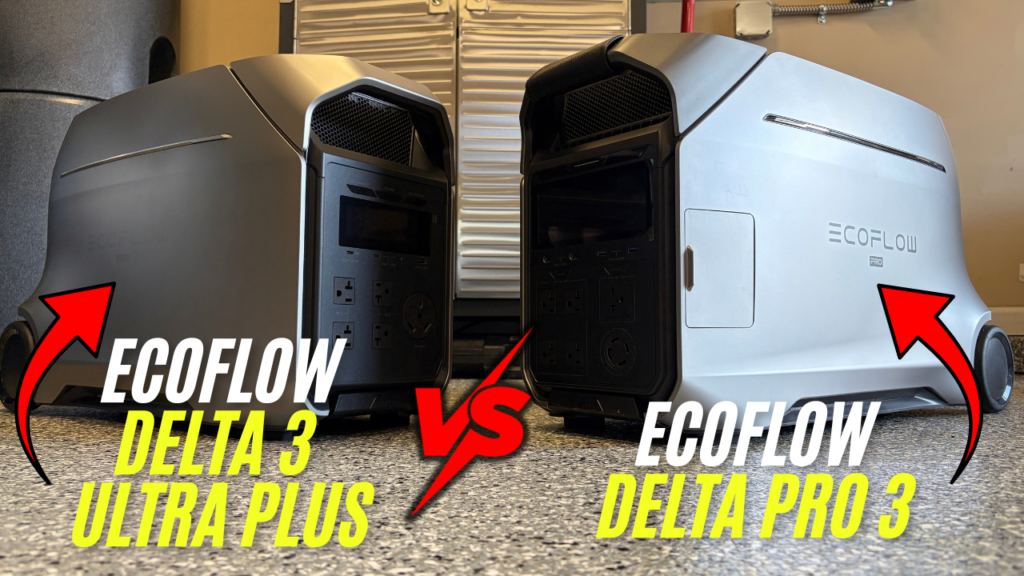
Two of EcoFlow’s best portable power stations side-by-side. Both are excellent home backup options. Here’s everything you need to know to choose the right one for your home.
01Quick Context
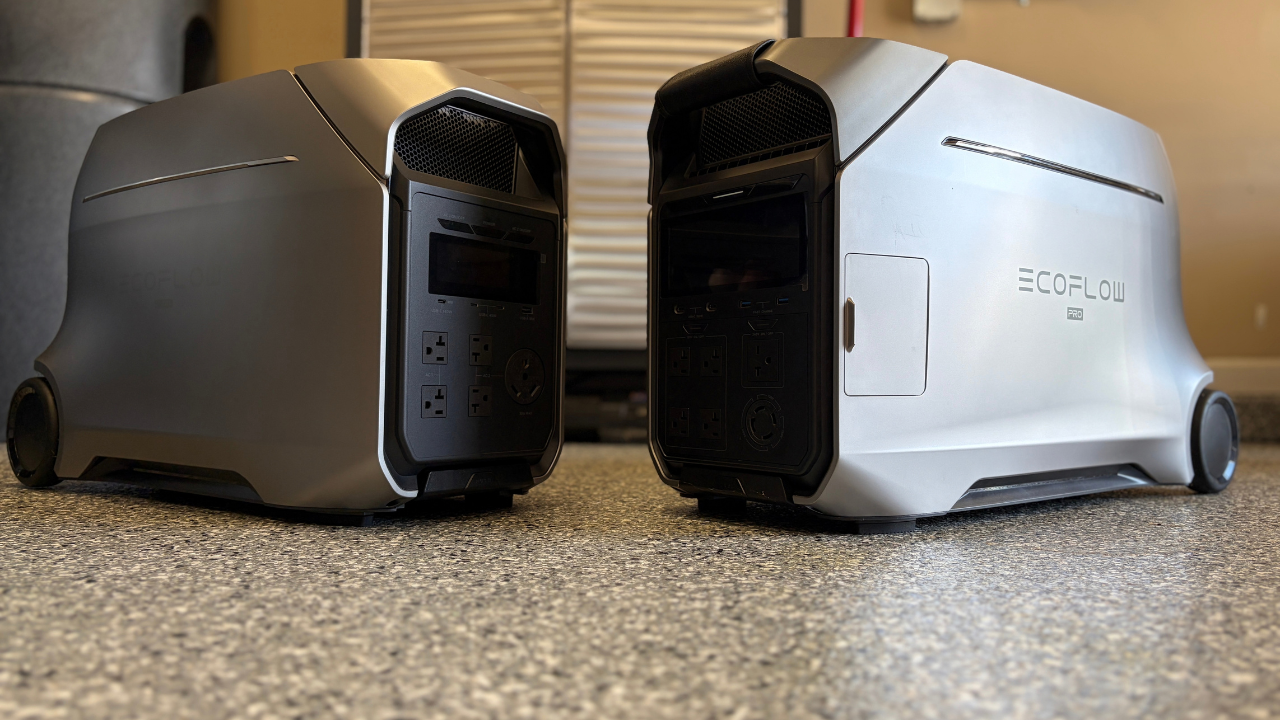
If you’re shopping for reliable home backup power and keep seeing these two EcoFlow models recommended—you’re not alone. The Delta Pro 3 and Delta 3 Ultra Plus are two of the best portable power stations on the market today, and they’re surprisingly similar in many ways. Both are genuinely excellent options for connecting to your home to provide backup power during outages.
The key difference? The Delta Pro 3 is the higher-end, more powerful option with greater expandability and 240V capability. The Delta 3 Ultra Plus is a slightly more portable alternative that still delivers serious backup power at a significantly lower price point. Let me break down the differences so you can decide which one makes sense for your specific situation.
02Battery Capacity & Power Output
The most important specs when choosing a power station are capacity and continuous power output. Here’s how these two units compare:
| Specification | Delta Pro 3 | Delta 3 Ultra Plus |
|---|---|---|
| Base Battery Capacity | 4,096 Wh (4 kWh) | 3,072 Wh (3 kWh) |
| Continuous AC Output | 4,000W | 3,600W |
| Surge Output (X-Boost) | 6,000W | 7,200W |
| Voltage Output | 120V/240V split-phase | 120V only |
| Max Expandable Capacity | 48 kWh (with batteries + generator) | 11 kWh (with 2 extra batteries) |
What This Means: The Delta Pro 3 delivers 400W more continuous power and scales significantly higher for multi-day backup scenarios. If you need to run a central air conditioner, well pump, or electric dryer—the Delta Pro 3’s 240V capability is a decisive advantage. The Delta 3 Ultra Plus still handles most household essentials effectively and actually has a higher surge capacity (7,200W vs 6,000W) for startup power, but it maxes out at 11kWh total expansion compared to the Pro 3’s 48kWh potential.
03Charging Speed & Input Options
| Charging Method | Delta Pro 3 | Delta 3 Ultra Plus |
|---|---|---|
| AC Charging (Wall Outlet) | 2.7 hours (0-80%) | 1.5 hours (0-80%) |
| Solar Input Max | 2,600W | 1,600W |
| Solar + AC Hybrid | 1.8 hours (0-80%) | 1.5 hours (0-80%) |
| Generator Input | 3,200W | 3,200W |
Real Talk: The Delta 3 Ultra Plus charges significantly faster from a wall outlet—about an hour and 12 minutes quicker. For post-outage recovery, that’s genuinely useful. However, if you’re using a solar array and generator setup (which most serious backup users prefer), both units are lightning fast. The Delta Pro 3’s higher solar input capacity (2,600W vs 1,600W) is beneficial if you have a large panel array. For most homeowners, the wall-outlet speed advantage of the Ultra Plus is the more practical consideration.
04Design, Portability & Physical Specs
Delta Pro 3
Weight: 113.5 lbs
Dimensions: 24.4 × 15.3 × 10 in
Design: Home integration focused
- Built for Smart Home Panel 2 integration
- 240V outlet built-in
- Industrial-grade wheels and handle
- Semi-permanent installation
Delta 3 Ultra Plus
Weight: 74.3 lbs
Dimensions: Compact suitcase-style
Design: Portable & lightweight
- Much lighter and genuinely portable
- One person can easily move it
- Large, bright display screen
- Great for flexible placement
Portability Winner: The Delta 3 Ultra Plus is dramatically more portable at 74.3 lbs vs 113.5 lbs. If you plan to move your power station between rooms, vehicles, or storage locations, this is a meaningful difference. However, if you’re planning permanent whole-home integration, weight is less of a concern.
05Outlets & Connectivity
| Port Type | Delta Pro 3 | Delta 3 Ultra Plus |
|---|---|---|
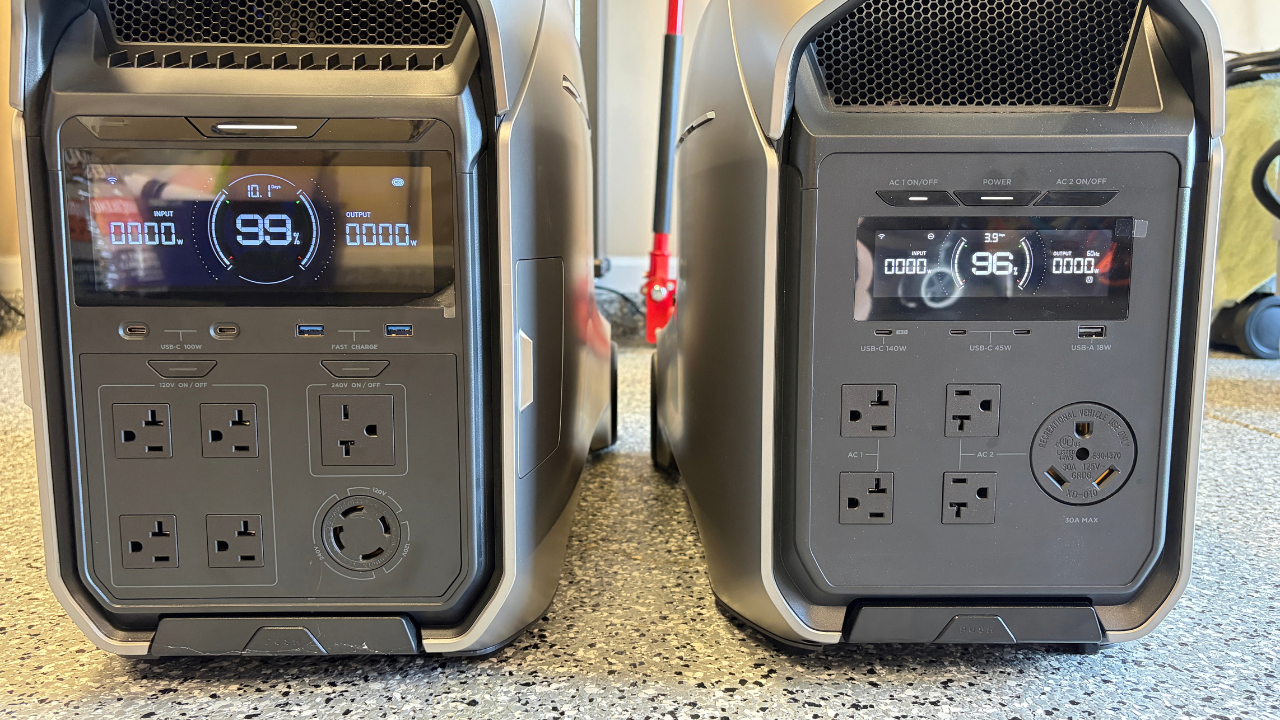
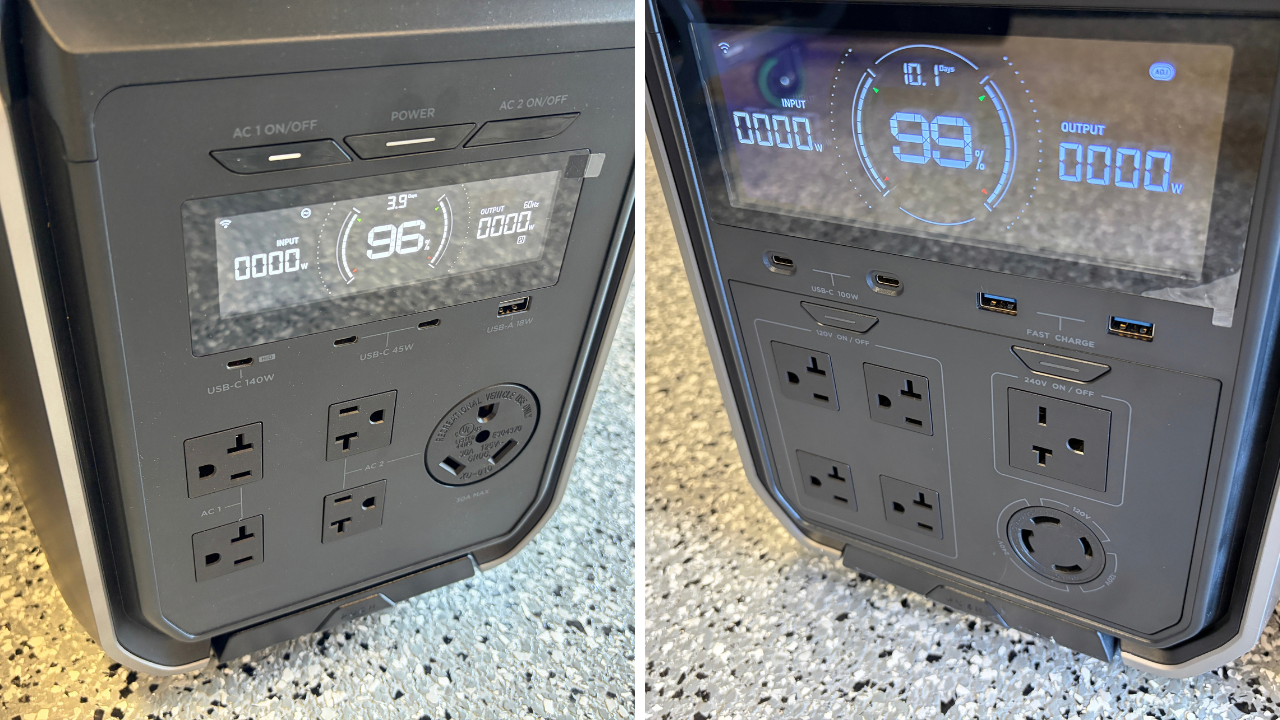
| AC Outlets (120V) | 4× 20A + 1× 30A RV | 4× AC outlets |
| AC Outlets (240V) | 2× dedicated 240V | None |
| USB-C Ports (Fast Charge) | 1× 100W | 2× 140W |
| USB-A Ports | Multiple | 2× USB-A |
| Total Outlet Count | 8+ ports | 11 ports total |
The Real Difference: The Delta 3 Ultra Plus has more total outlets and significantly better USB-C charging options (2× 140W vs 1× 100W) for phones and devices. If you’re charging multiple devices simultaneously, the Ultra Plus is superior. The Delta Pro 3’s advantage is its 240V outlets—essential for certain high-voltage appliances. For most homes running standard household appliances and personal devices, the Delta 3 Ultra Plus’s outlet variety is actually more practical.
06Battery Technology & Longevity
Battery Chemistry (Both Units): Automotive-grade LiFePO4 (LFP) cells—the safest and longest-lasting chemistry available.
Cycle Life (Both Units): Rated at 4,000 cycles to 80% capacity, roughly equivalent to 10-11 years of regular daily use.
Battery Safety (Both): Advanced monitoring of 40+ safety indicators, temperature control, protection from overcharging/over-discharging, and environmental tolerance (drop resistant, salt spray resistant, 95% humidity tolerance).
Bottom Line: Battery longevity and reliability are virtually identical between these two units. Both will reliably power your home for a decade or more with proper use. This is genuinely one area where you cannot make a mistake with either choice. Both use the same proven LFP chemistry that EcoFlow has proven reliable across tens of thousands of units.
07Smart Features & App Control
| Feature | Delta Pro 3 | Delta 3 Ultra Plus |
|---|---|---|
| EcoFlow App Control | Full remote monitoring | Monitoring + Smart Output Priority |
| Smart Home Integration | Smart Home Panel 2 compatible | Manual inlet box connection |
| Auto Generator Control | Available with compatible generators | Available with compatible generators |
| Time-of-Use Mode | Peak shaving available | TOU rate optimization |
| UPS Function | 10ms auto-switch | 10ms auto-switch |
Smart Features Winner: The Delta 3 Ultra Plus has a slight edge with “Smart Output Priority,” which intelligently manages loads to keep critical devices running. The Delta Pro 3’s integration with Smart Home Panel 2 is more powerful for whole-home backup, but that requires professional installation and additional investment.
08Quiet Operation
| Power Load Level | Delta Pro 3 | Delta 3 Ultra Plus |
|---|---|---|
| Under 2,000W (Normal Use) | 30 dB | 25 dB |
| Higher Loads | Noticeably quieter than competitors | Extremely quiet operation |
Real-World Audio: The Delta 3 Ultra Plus is noticeably quieter during normal operation. At 25dB, it’s barely above a whisper—you could run it in your living room during a blackout without it being distracting. The Delta Pro 3 at 30dB is still very quiet compared to traditional generators, but you’ll be aware of its presence. For people who care about noise during extended backup use, the Delta 3 Ultra Plus has a clear advantage.
09Expandability & Scaling
| Expansion Option | Delta Pro 3 | Delta 3 Ultra Plus |
|---|---|---|
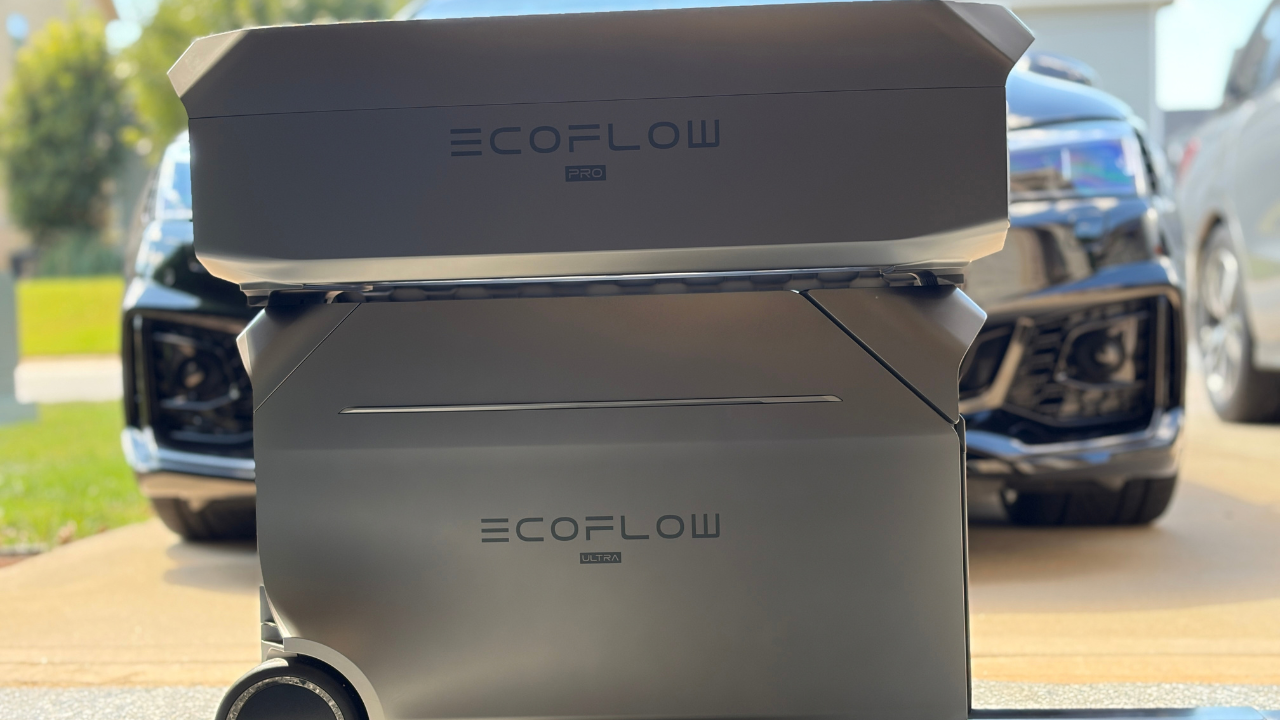
| Extra Batteries (Max) | Up to 2 per unit | Up to 2 per unit |
| With Extra Batteries | 12 kWh total | 11 kWh total |
| With Smart Generator | 48 kWh possible | 11 kWh maximum |
| Multiple Unit Stacking | Can chain 2-3 units | Designed as standalone |
| Extra Battery Cost | ~$1,900 each | ~$1,200-$1,400 |
Expandability Reality Check: If you ever need to expand beyond 11kWh, the Delta Pro 3 is your only option. It can grow to 48kWh with batteries and generator, making it genuinely future-proof for serious multi-day outages. However, extra batteries are expensive for both units. For most homeowners doing 24-48 hour backup scenarios, the 11kWh ceiling on the Ultra Plus is genuinely sufficient.
10Price Comparison
| Model | Typical Price Range | Extra Battery Cost | Value Assessment |
|---|---|---|---|
| Delta Pro 3 | $1,999 – $2,400 | ~$1,900 | Premium, maximum features |
| Delta 3 Ultra Plus | $1,399 – $1,699 | ~$1,200 – $1,400 | Smart value, 90% performance |
Real Value Assessment: The Delta 3 Ultra Plus costs approximately $400-600 less at typical street prices. That’s a meaningful difference. EcoFlow effectively markets this as about 35% less expensive while delivering roughly 90% of the performance for typical home backup scenarios. For a 24-hour outage keeping your essentials running, both are equally capable. For multi-day scenarios or maximum flexibility, the Pro 3’s higher cost becomes more justified.
11Which One Should You Choose?
Choose the Delta Pro 3 If:
- You have a larger home (4+ bedrooms) with significant electrical demands
- You need 240V output for specific appliances (central AC, electric dryer, well pump)
- You plan permanent integration with a Smart Home Panel 2
- You might need 20+ kWh for extended multi-day protection
- You want maximum future-proofing and flexibility for expansion
- You’re willing to invest in professional installation
Choose the Delta 3 Ultra Plus If:
- You have a smaller to medium-sized home (up to 3 bedrooms)
- You only need 120V outlets (covers 99% of household devices)
- You prefer lighter weight and genuinely portable equipment
- You want 24-48 hour backup capacity without massive expansion
- You care about quiet operation for indoor use
- You’re budget-conscious but demand genuine quality
- You want faster wall-outlet recharge speeds
- You value more total outlets for charging multiple devices
12Critical Differences Summary
1. 240V Output (The Biggest Difference)
The Delta Pro 3 is the only unit with built-in 240V outlets. This is essential for certain appliances. The Delta 3 Ultra Plus cannot directly power 240V appliances without external solutions. This is the single biggest functional difference between these units and should heavily influence your decision if you have 240V loads you need to backup.
2. Smart Home Integration
The Delta Pro 3 integrates seamlessly with EcoFlow’s Smart Home Panel 2 for automatic whole-home backup during outages. The Delta 3 Ultra Plus isn’t designed for this level of integration—it’s more of a portable backup you connect manually. Professional installation is more involved with the Pro 3.
3. Chaining Multiple Units
The Delta Pro 3 can be chained together (2-3 units) for combined power and capacity. The Delta 3 Ultra Plus isn’t designed for multi-unit setups. If you ever need true parallel operation scaling, it’s Delta Pro 3 only.
4. Expansion Ceiling
Delta Pro 3 maxes out at 48kWh with proper setup. Delta 3 Ultra Plus tops out at 11kWh. For serious multi-day backup or permanent off-grid installation, this matters significantly.
13Long-Term Value Assessment
Here’s my honest take after thoroughly comparing both units:
If Money Isn’t a Constraint
The Delta Pro 3 is the objectively “better” unit overall. It’s more powerful, scales higher, offers 240V output, and integrates with your home’s electrical panel. If you’re investing this much in backup power, the extra $500-600 for the Pro 3 might be worth it for the peace of mind and future-proofing.
If You’re Budget-Conscious But Want Excellent Quality
The Delta 3 Ultra Plus is genuinely the smarter choice for most homeowners. It delivers remarkable performance, is significantly lighter and quieter, charges faster from wall outlets, and costs meaningfully less. For typical home backup scenarios (4-24 hour outages covering essentials), it’s more than capable. You’ll save money that you can put toward solar panels, extra batteries, or other emergency preparations.
The Sweet Spot Reality
Most homeowners with medium-sized homes (3-4 bedrooms) who don’t need 240V appliances will be happier with the Delta 3 Ultra Plus. The Delta Pro 3 is optimized for larger homes or those planning serious whole-home integration from day one.
14Our Verdict
Both Units Are Excellent
I genuinely mean that. EcoFlow nailed it with both the Delta Pro 3 and Delta 3 Ultra Plus. They’re not traditional competitors—they’re options for different scenarios and priorities.
Best Overall for Whole-Home Backup: Delta Pro 3
Superior power output, 240V capability, maximum expandability, and Smart Home Panel integration make this the choice for anyone building a comprehensive home backup system or with significant electrical demands. If you need to future-proof your backup power, this is the unit. Read our full Delta Pro 3 review for in-depth testing and detailed feedback.
Best Value for Most Homeowners: Delta 3 Ultra Plus
Outstanding performance at a significantly lower price point, quieter operation, better portability, and sufficient capacity for standard home backup scenarios. This is my recommendation for the average homeowner looking for genuine backup power without overbuying features they won’t use. Read our full Delta 3 Ultra Plus review for detailed specs and real-world performance data.
Both come with 5-year warranties, proven LFP battery technology rated for 10+ years of use, and the backing of EcoFlow—the #1 manufacturer in this space. You literally cannot make a bad choice between these two units. It comes down to your specific home size, electrical needs, budget, and whether you ever see yourself needing 240V output or multi-unit scaling.
15Final Thoughts
I’ve tested and researched countless power stations over the years, and these two EcoFlow units stand out as genuinely excellent options for home backup power. The fact that they’re so similar in many ways (same battery chemistry, warranty, safety features, core app integration) speaks to EcoFlow’s consistent quality across their product line.
The main differences are in power output, expandability ceiling, 240V capability, and price—not in reliability or feature set. Both units will serve your home reliably for a decade. That’s the kind of confidence both inspire.
If you’re currently on the fence between these two, ask yourself:
- Do I need 240V output? (Pro 3 if yes, Ultra Plus if no)
- Do I want permanent home integration? (Pro 3 if yes, Ultra Plus if no/maybe later)
- Is portability and quiet operation important? (Ultra Plus definitely)
- Am I budget-conscious? (Ultra Plus saves $400-600)
Whichever direction you choose, you’re selecting a powerhouse unit that will serve your home reliably for a decade or more. That’s the genuine confidence both of these units inspire.
16Ready to Choose?
Both the Delta Pro 3 and Delta 3 Ultra Plus are available directly from EcoFlow. Click below to view current pricing, specifications, and availability.
EcoFlow Delta Pro 3
4,096Wh | 4,000W Continuous | 240V Output
Best for whole-home backup, expandability, and 240V appliances.
EcoFlow Delta 3 Ultra Plus
3,072Wh | 3,600W Continuous | 120V Only
Best for portability, budget-conscious buyers, and most home backup scenarios.