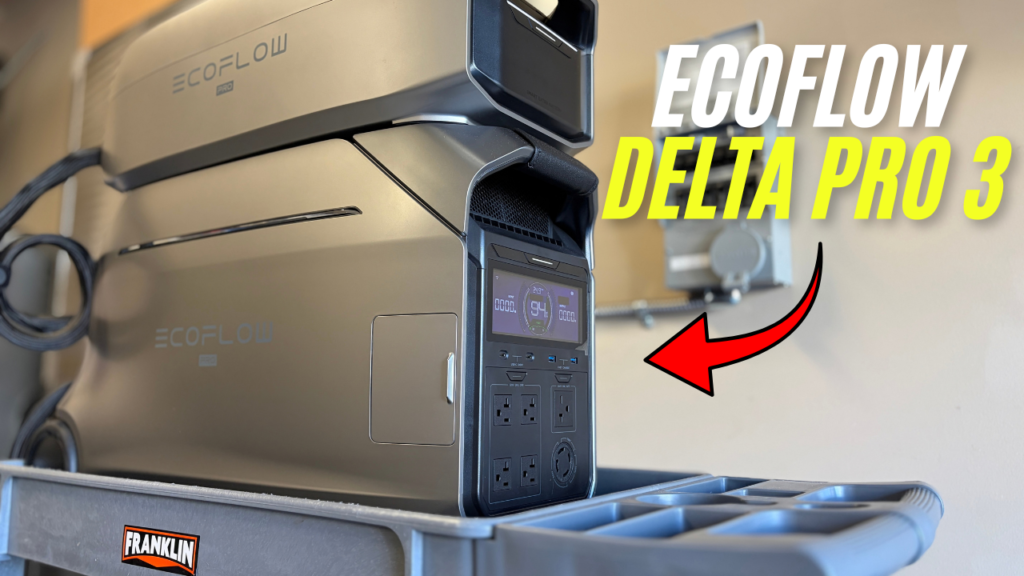
EcoFlow Delta Pro 3 Review
A 4,096Wh powerhouse with 4,000W continuous output and 6,000W surge via X-Boost, true 240V capability, wheels for portability at 113.5 lbs, and expandable up to 36kWh total with extra batteries and multi-unit configuration. We tested it as a whole-home backup, off-grid power source, and mobile energy solution to see where it genuinely excels.
01The short version
What it gets right
- 4,000W continuous output (6,000W X-Boost surge) handles real appliances and tools without compromise
- True 240V output opens up heavy-duty applications like mini-split AC, tankless water heaters, and entire circuit backup
- Genuinely expandable — add up to 2 extra batteries per unit, up to 3 units total via Smart Home Panel 2 (36kWh max)
- Wheels and handle make 113.5 lbs feel manageable for a unit this powerful
- Manual transfer switch integration for legitimate whole-home backup during outages
- Multiple input options including TT-30R RV port, Anderson connectors, and 2,600W solar input
- Five-inch display with real-time power monitoring and circuit control
Who it’s for
- Homeowners building real backup power with a transfer switch and modular expandability
- Off-grid builders who want scalable energy storage and 240V capability
- RV enthusiasts and mobile workers needing serious power with portability
- Contractors and workshop owners running power equipment
- Anyone who thinks they might need more capacity later and wants to avoid replacing the entire unit
02Real power output: the honest breakdown
Here’s where you need clarity: the Delta Pro 3 has a 4,000W continuous AC output with 6,000W available via X-Boost technology. This is a real-world distinction. X-Boost lets you temporarily pull more power for startup surges on compressor-based appliances (refrigerators, AC units) but isn’t sustained output. At continuous 4,000W, here’s what that translates into:
| Device or appliance | Typical draw | Continuous runtime? |
|---|---|---|
| Full-size refrigerator | 150–200W avg | Yes, all day (20+ hours) |
| Mini-split AC system (240V) | 2,000–3,000W | Yes, 1–2 hours continuous |
| Electric water heater (240V, running) | 4,000–5,500W | Exceeds continuous limit — X-Boost may help briefly |
| Microwave + coffee maker simultaneously | 3,200W combined | Exceeds continuous limit but feasible with X-Boost |
| Table saw or circular saw | 1,500–2,000W | Yes, well within continuous rating |
| Window AC unit (120V, modest) | 1,000–1,500W | Yes, 2–4 hours continuous |
| Laptop workstation + monitors | 200–300W | Yes, 12+ hours |
The key distinction: 4,000W continuous is the honest limit. X-Boost’s 6,000W helps with startup surges but won’t sustain high-power loads. For 240V heavy equipment, you’ll manage load size more than run everything simultaneously.
03The 240V advantage
Here’s where the Delta Pro 3 separates itself from 99% of portable power stations: it has a genuine 240V output capability. This changes what you can actually back up during an outage.
Most power stations are 120V-only, which means you can run refrigerators, lights, routers, and small appliances — but you can’t touch 240V loads like your air conditioning system, electric water heater, electric range, or mini-split heat pump. The Delta Pro 3 removes that limitation.
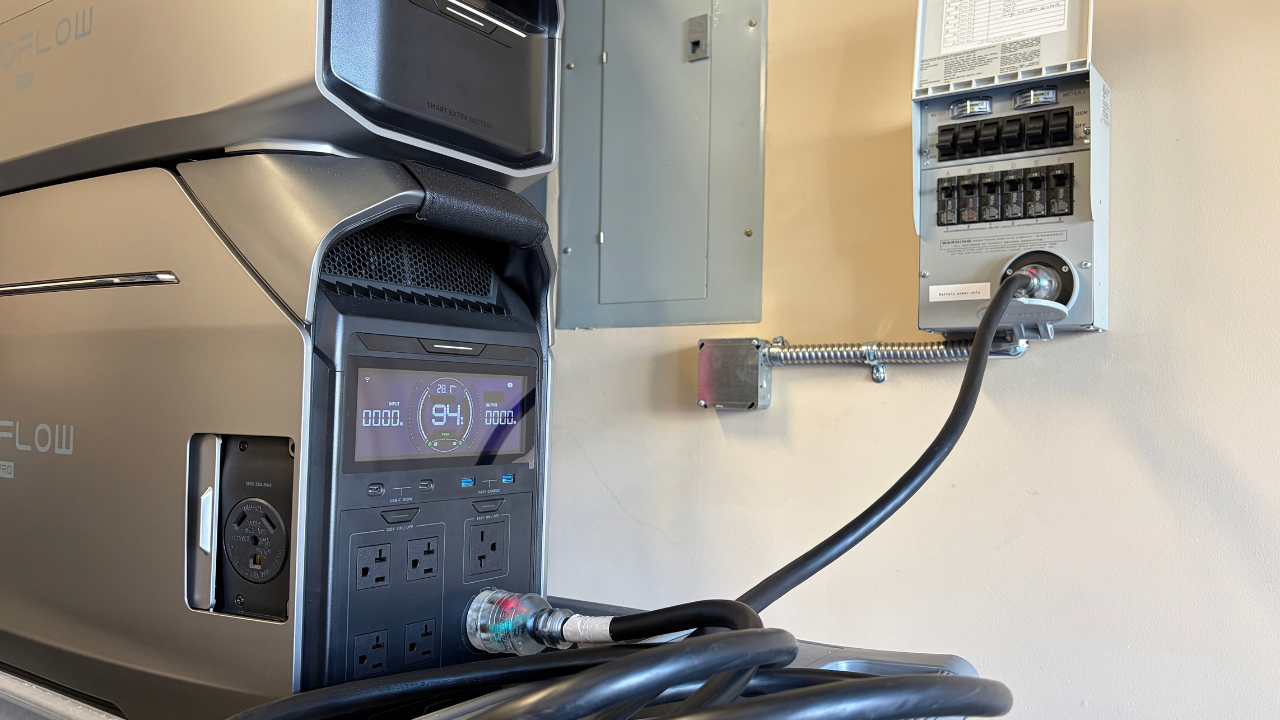
Combined with a manual transfer switch installed in your electrical panel, the 240V output means you can literally plug the Delta Pro 3 into your home’s circuits and switch to battery during an outage. Your mini-split AC, water heater, and other heavy-duty equipment now have backup power. That’s not a marketing claim — it’s a genuine, code-compliant way to use this unit as whole-home backup power.
Professional installation required
Using the 240V output with a transfer switch isn’t a DIY project. You need a licensed electrician to install the transfer switch, size the wiring correctly, and ensure it meets local electrical code. The hardware is legitimate — but the installation has to be done right. Don’t cheap out on this part.
04Input options: flexibility built in
The Delta Pro 3 gives you multiple ways to charge, which is essential for a unit this size and capacity.
AC Input (3,600W @ 240V or 1,800W @ 120V)
The Delta Pro 3 is flexible on AC input. If you have access to 240V power, you can charge at 3,600W, getting a full recharge in roughly 1.2–1.5 hours. From standard 120V wall power, it pulls 1,800W and recharges in 2–2.5 hours. This is significantly faster than most alternatives and means you can routinely top off between storms or use cases.
Solar Input (up to 2,600W combined)
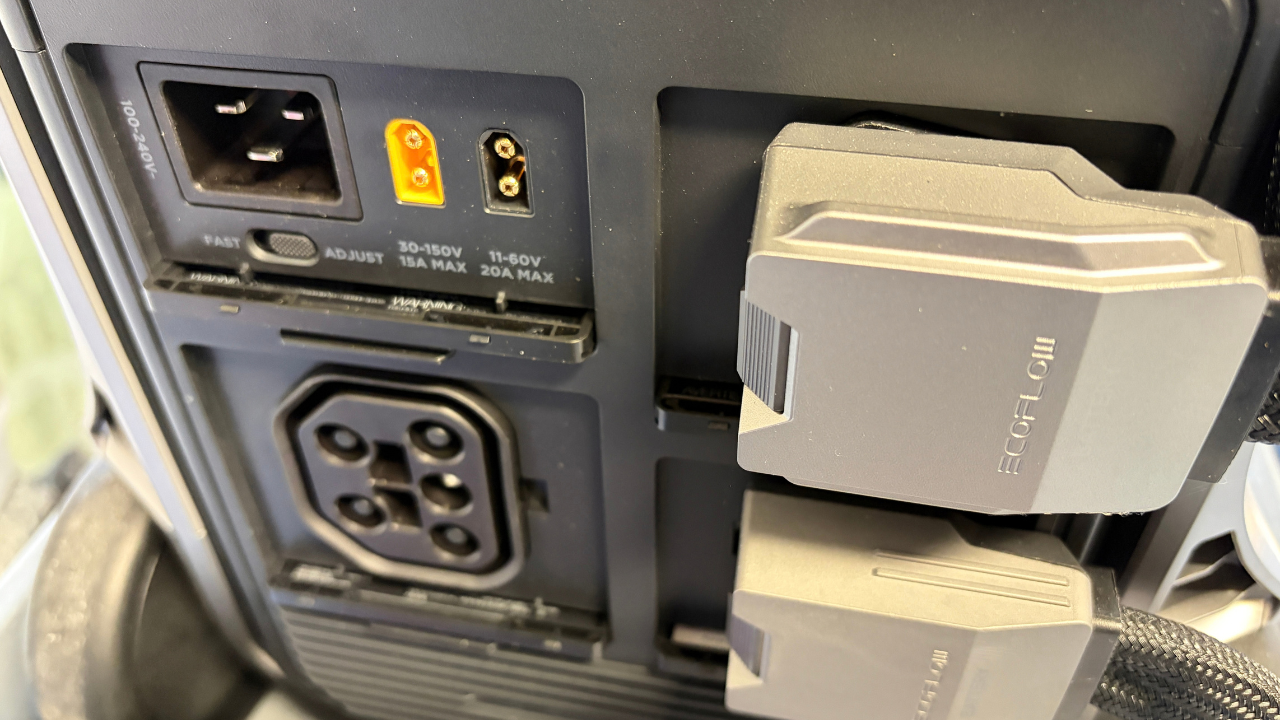
Two XT60i ports on the rear accept solar panels or additional solar charge controllers. At 2,600W solar input, a full recharge takes roughly 1.5–2 hours in optimal sun conditions — genuinely fast for a solar system. The built-in MPPT (Maximum Power Point Tracking) means you’re extracting maximum energy from your panels, not settling for basic charging.
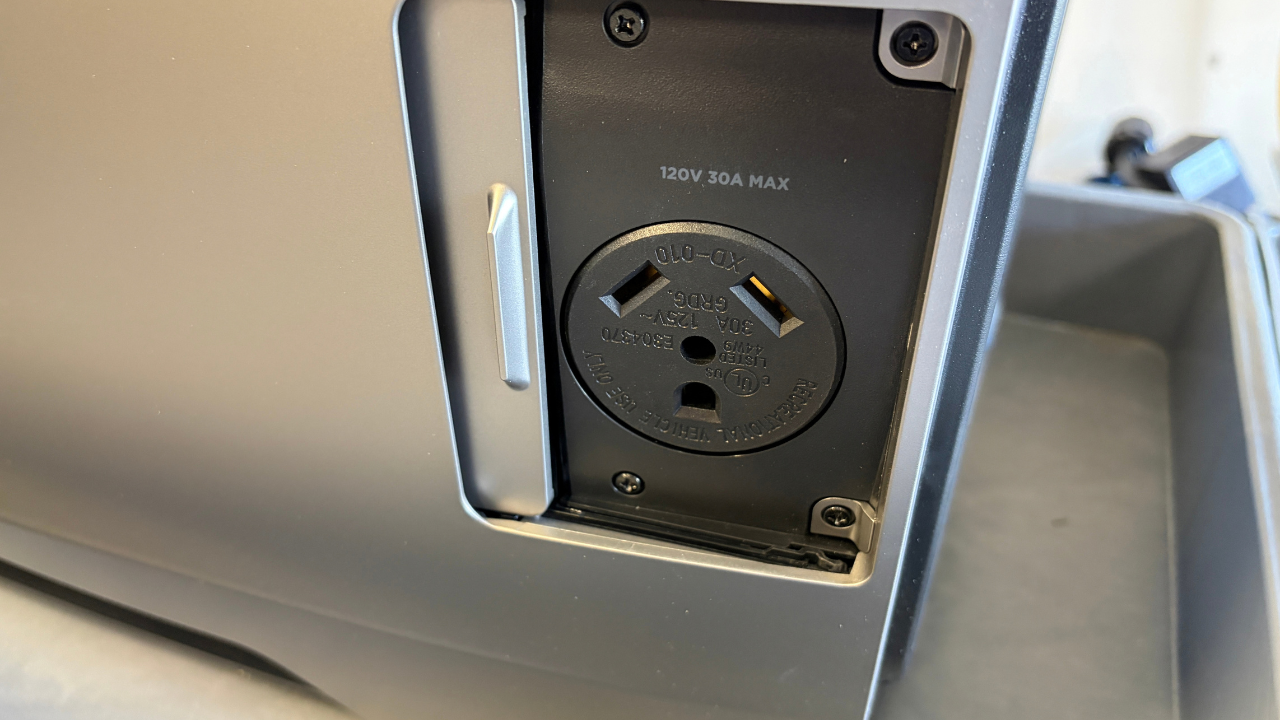
RV Integration (TT-30R Port)
The TT-30R connector is standard on RVs and RV pedestal hookups. If you’re charging from an RV shore power setup or have access to a campground pedestal, the Delta Pro 3 plugs in directly — no adapters needed. This is a genuinely thoughtful feature for mobile applications.
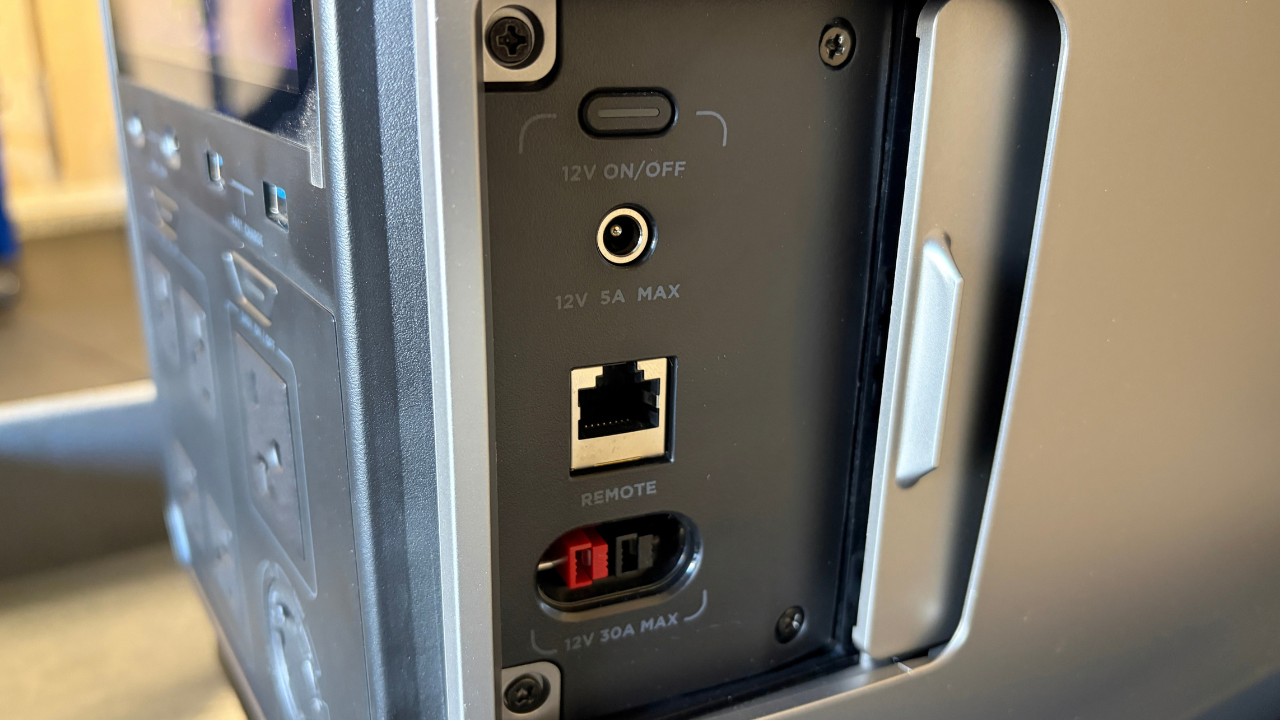
12V Barrel Plug (Vehicle Charging)
You can trickle-charge from a vehicle 12V outlet, though given the massive capacity, vehicle charging is more of an emergency option than a primary charging method. Useful to know about, but not practical for regular use.
05Expandability: unlimited growth
Most powerful portable power stations are fixed capacity. You buy what you need upfront, and if you later realize you need more storage, you’re replacing the entire unit. The Delta Pro 3 doesn’t work that way.
Each Delta Pro 3 unit supports connection to up to 2 extra batteries, with each module adding 4,096Wh of capacity. Here’s the math per unit:
- Delta Pro 3 alone: 4,096Wh
- Delta Pro 3 + 1 battery: 8,192Wh
- Delta Pro 3 + 2 batteries: 12,288Wh
But here’s where it gets genuinely powerful: using the EcoFlow Smart Home Panel 2, you can connect up to 3 Delta Pro 3 units in parallel, each with their own 2 batteries. That gives you a total system capacity and output of:
- 3 × Delta Pro 3 units: 12,288Wh base capacity (3 × 4,096Wh)
- + up to 6 batteries total: up to 36,864Wh maximum capacity
- Combined AC output: 12,000W continuous (3 × 4,000W)
This is genuinely modular growth. Start with a single unit for weekend camping or emergency backup. If you later need more capacity for off-grid living or whole-home backup, add a battery to the same unit. Need even more? Add another complete Delta Pro 3 unit and its own batteries. You’re never locked into a fixed system — you scale exactly as your needs demand, and your continuous power output scales too.
The Delta Pro 3 also accepts older Delta Pro Extra Batteries, so if you find used batteries at a good price or want to mix in older inventory, they work fine. This backward compatibility is genuinely thoughtful design.
06Design and portability despite the weight
At 113.5 pounds (51.5 kg) and roughly 24 × 15 × 10 inches, the Delta Pro 3 is serious hardware. But EcoFlow made some smart choices to make it actually usable.
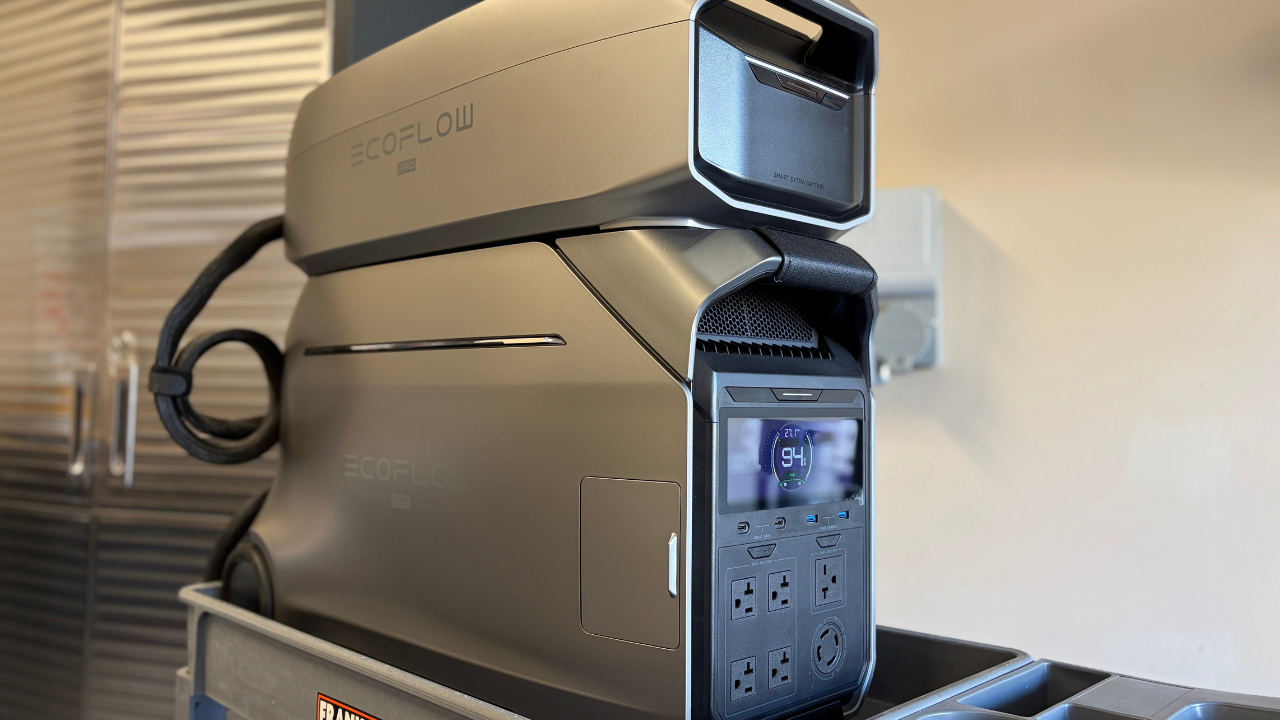
Wheels and handle: Unlike some large power stations that sit flat on the ground, the Delta Pro 3 has industrial-grade wheels and a telescoping handle. You can roll it around, which changes everything when you’re moving it from storage to a location, or repositioning it during setup. For something this heavy, the wheels are a genuine game-changer.
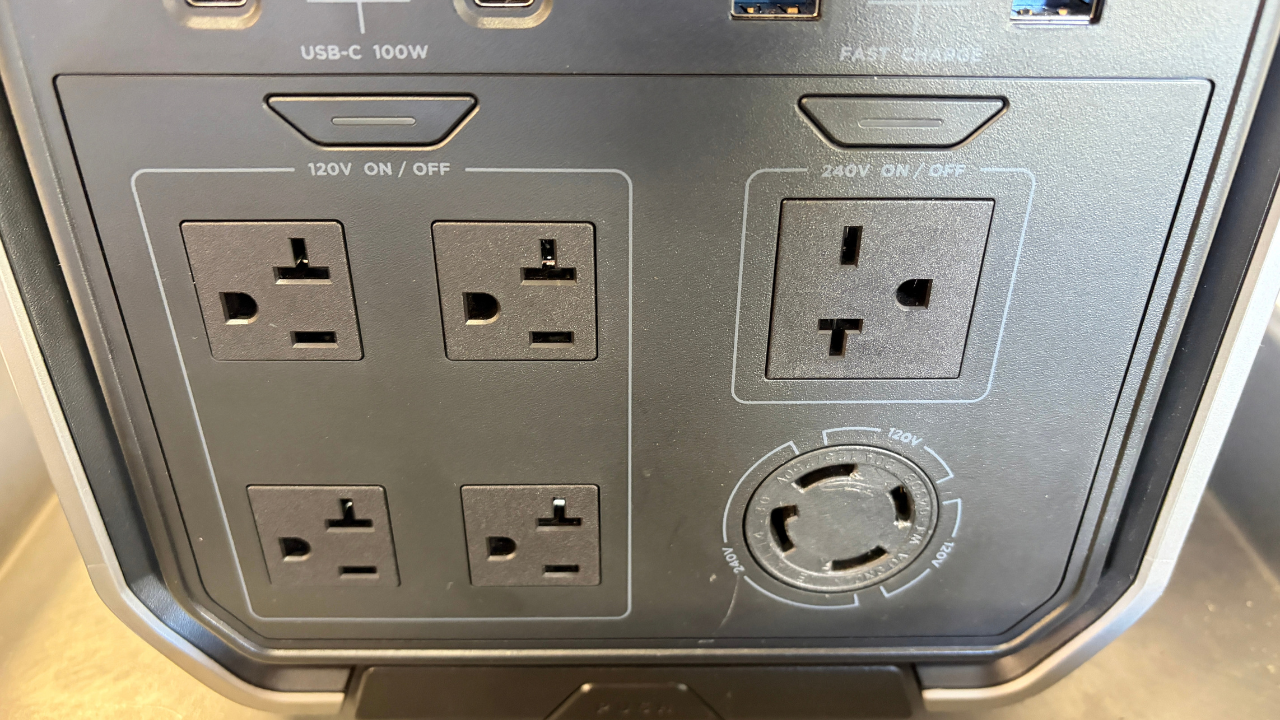
Organized port layout: The front panel has everything you need for routine use — AC outlets, 240V outlet, USB ports, power button. The rear has input ports and less-frequently accessed controls. This front-back division means you’re not constantly reaching around to access basic functions.
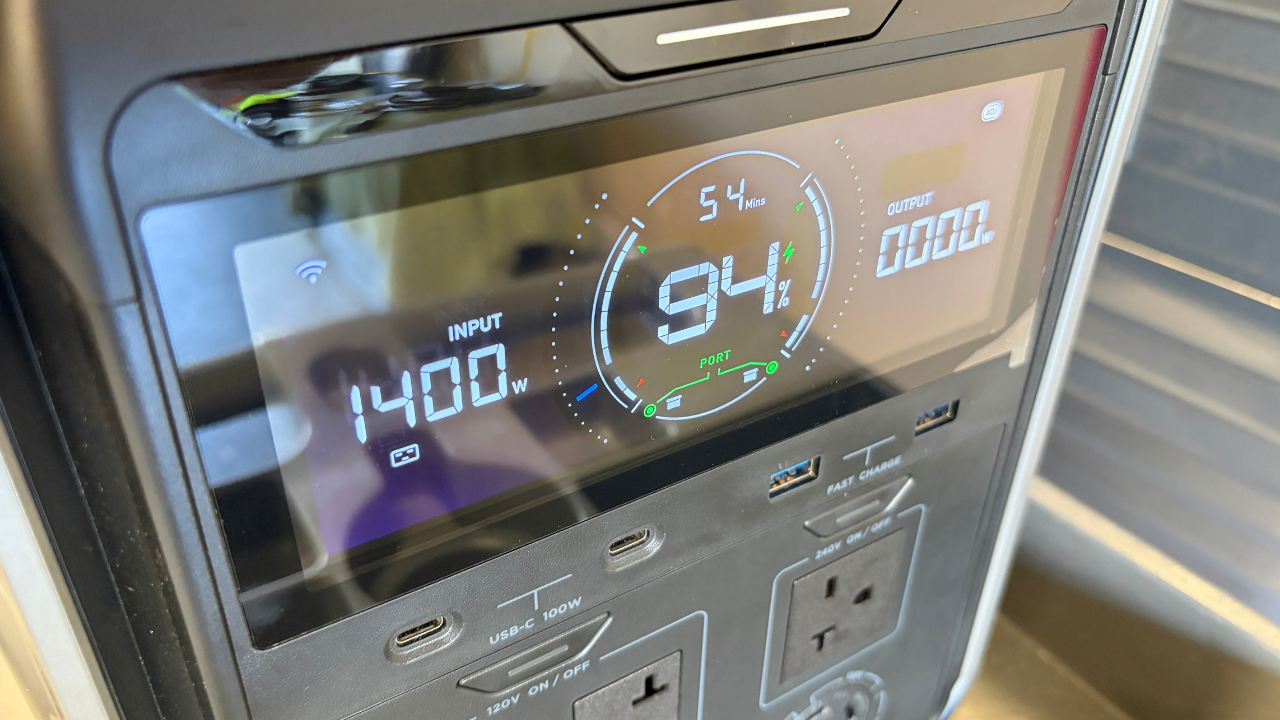
Display and controls: The five-inch display is bright and responsive, putting all the information you need in one place. You can see power draw, state of charge, individual circuit status, and estimated runtime at a glance. It’s not a gimmick — it’s genuinely useful when you’re managing power in a critical situation.
07Delta Pro 3 vs. Delta 3 Ultra Plus: which one?
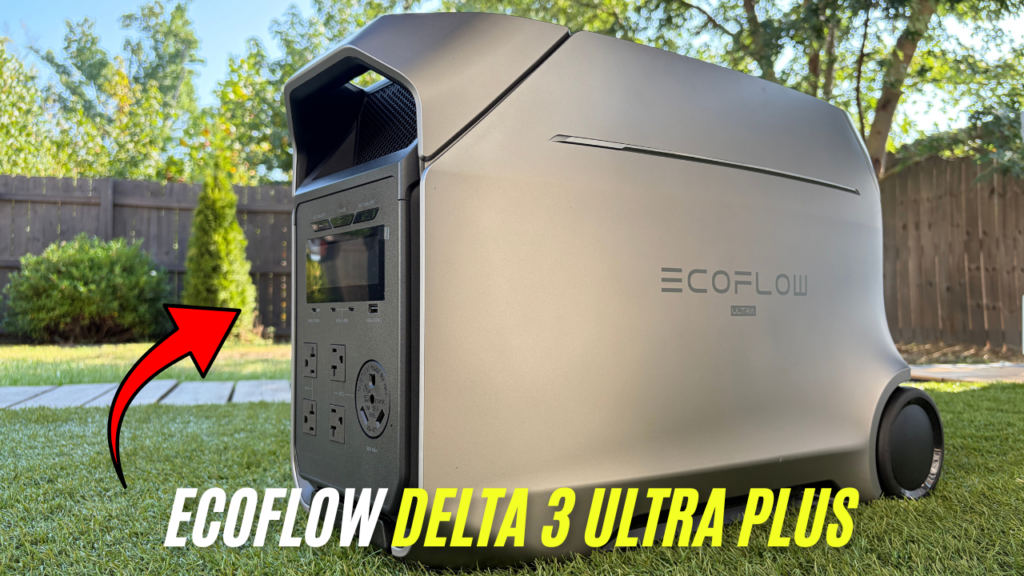
EcoFlow’s lineup can be confusing, so here’s the honest comparison between these two capable units. If you want to dive deeper into the Delta 3 Ultra Plus, we’ve got a full breakdown of that model as well.
| Feature | Delta Pro 3 | Delta 3 Ultra Plus |
|---|---|---|
| Battery capacity | 4,096Wh | 3,072Wh |
| AC continuous output | 4,000W | 3,600W |
| AC surge (X-Boost) | 6,000W | N/A |
| 240V output | Yes | Yes |
| Expandable? | Yes — up to 2 batteries + Smart Home Panel 2 (3 units) | No expansion capability |
| RV TT-30R port | Yes | No |
| Solar input max | 2,600W | 1,200W |
| Weight | 113.5 lbs | 62.8 lbs |
| Price tier | Premium — highest | Premium — mid-to-high |
| Best for | Whole-home backup, off-grid, extreme scalability | Serious portable power, fixed capacity |
The real difference: If you think you’ll need more capacity in the future, want whole-home backup with massive scalability, or plan to build a multi-unit system, the Delta Pro 3 is the right choice. If you need serious power right now but don’t plan to expand, the Delta 3 Ultra Plus is lighter, less expensive, and still incredibly capable. The Delta Pro 3 is an investment in a system you can grow indefinitely; the Ultra Plus is a premium standalone solution.
08Full specifications
09Who should buy this
Excellent fit
- You want real whole-home backup with a transfer switch and 240V capability
- You’re building an off-grid system with potential for serious growth
- You plan to expand with extra batteries or multiple units
- You’re comfortable with the cost and weight for a genuinely scalable energy solution
- You have space to store a 113.5 lb unit with wheels and can access 240V for fastest charging
Look elsewhere
- You need something lightweight and portable for casual camping
- Your budget is tight — this is premium pricing for premium capability
- You want a fixed, non-expandable solution that weighs less
- You’re limited to 120V charging only (you’ll get 1,800W max instead of 3,600W)
10Common questions
What’s the difference between X-Boost’s 6,000W and continuous 4,000W?
X-Boost is a surge feature that temporarily increases output to 6,000W for startup demands on things like refrigerators or AC compressors. It’s not sustained output — it’s there to help appliances that need an extra power kick when they first turn on. Your continuous running limit is 4,000W. This is an honest distinction, and you’ll manage your loads accordingly.
Can I really use this as whole-home backup?
With a manual transfer switch installed by a licensed electrician, yes — absolutely. The 240V output and 4,000W continuous power mean you can legitimately back up your home’s essential circuits during an outage. You’ll need to manage loads carefully (don’t run AC and electric range simultaneously), but it’s a genuine, code-compliant backup solution. Don’t cheap out on the transfer switch installation — hire a pro.
How many extra batteries should I buy?
That depends on your use case. One unit alone (4,096Wh) handles weekend camping or short outages. For serious home backup during a multi-day outage, one or two extra batteries per unit gets you into the 8–12kWh range, which covers a typical household’s daily essential loads. For off-grid living or building a multi-unit system, two batteries per unit makes sense, and adding more Delta Pro 3 units through Smart Home Panel 2 gives you unlimited scaling. Start with the base unit and add as your needs clarify.
Can I really connect 3 Delta Pro 3 units together?
Yes — but you need the EcoFlow Smart Home Panel 2 to do it properly. With Smart Home Panel 2, you can connect up to 3 Delta Pro 3 units in parallel, giving you 12,288Wh base capacity (or up to 36,864Wh with 2 batteries per unit), and a combined 12,000W continuous output. This is a legitimate whole-home backup solution for serious energy independence. Each unit operates independently, but they’re coordinated through the Smart Home Panel 2 for seamless switching and load management.
How fast can I really recharge this?
If you have access to 240V power, the Delta Pro 3 recharges at 3,600W, getting from empty to full in roughly 1.2–1.5 hours. From standard 120V wall power, it pulls 1,800W and takes 2–2.5 hours. Solar at 2,600W input gets you a full recharge in 1.5–2 hours in good sun. The 240V charging speed is genuinely useful — you can realistically top off between outages or use cases instead of planning around a multi-hour charge cycle.
Is the 240V output limited to specific appliances?
No — the 240V outlet handles anything within the 4,000W continuous limit. AC units, water heaters, mini-splits, some power tools — if it’s 240V and doesn’t exceed the power rating, it’ll work. The limitation is total wattage across all loads, not specific appliance type. High-draw items like electric ranges or 5,500W water heaters will max out the continuous output alone.
What happens if I plug in older Delta Pro batteries?
They work fine. The Delta Pro 3 is backward compatible with older Delta Pro Extra Batteries. This is genuinely useful if you find used batteries at a good price or want to mix inventory across units.
Does the display really help during an actual outage?
Yes. The display shows real-time power draw, state of charge, and estimated runtime. When you’re managing a critical backup situation, knowing “your current load is 2,100W and you have 1.5 hours of runtime left” is invaluable information. It lets you make smart decisions about what to run and when.
Is the 113.5 lb weight a real problem?
Not with the wheels. You can roll it around like luggage. Where it becomes a factor is if you need to carry it up stairs, lift it into a vehicle, or position it in confined spaces. For typical use cases — keeping it in a garage, rolling it out during an outage, using it on a deck or patio — the weight is manageable. Just don’t expect to carry this one like a suitcase.
11Bottom line
The EcoFlow Delta Pro 3 is a genuinely premium power station that justifies the premium. Four thousand watts of continuous output with 6,000W X-Boost surge, true 240V capability, wheels for practical portability, and full expandability (both extra batteries per unit and multiple units via Smart Home Panel 2) combine to create something that’s equally at home as a whole-home backup system, an off-grid cornerstone, or a mobile energy bank.
The weight and size mean it’s not a casual purchase. But if you’re serious about energy resilience, the ability to add capacity without limits as your needs grow, and the flexibility to run 240V equipment or whole-home backup loads, the Delta Pro 3 isn’t just good — it’s the reference standard for portable power at this scale.
This is what a premium power station looks like when it actually performs at the premium level. Well worth the investment if your needs match its capability.