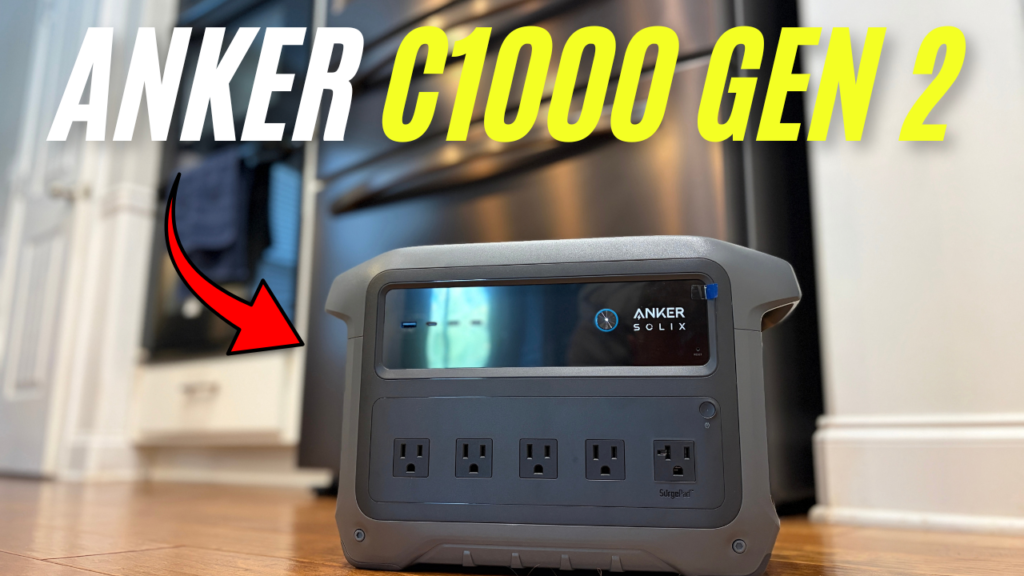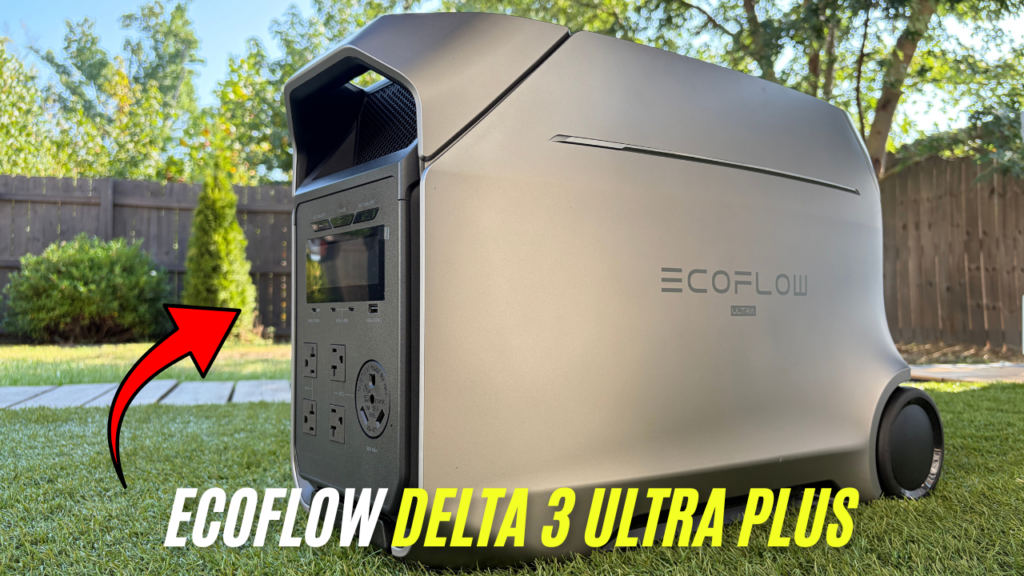
Anker SOLIX S5000 vs. EcoFlow TITAN 5000: Plug-In Power or Whole-Home Backup?
Two 5kWh-class systems built for different jobs. Here is how the announced specs, pricing, and claims compare, and where the sources still leave gaps.
01Quick Context
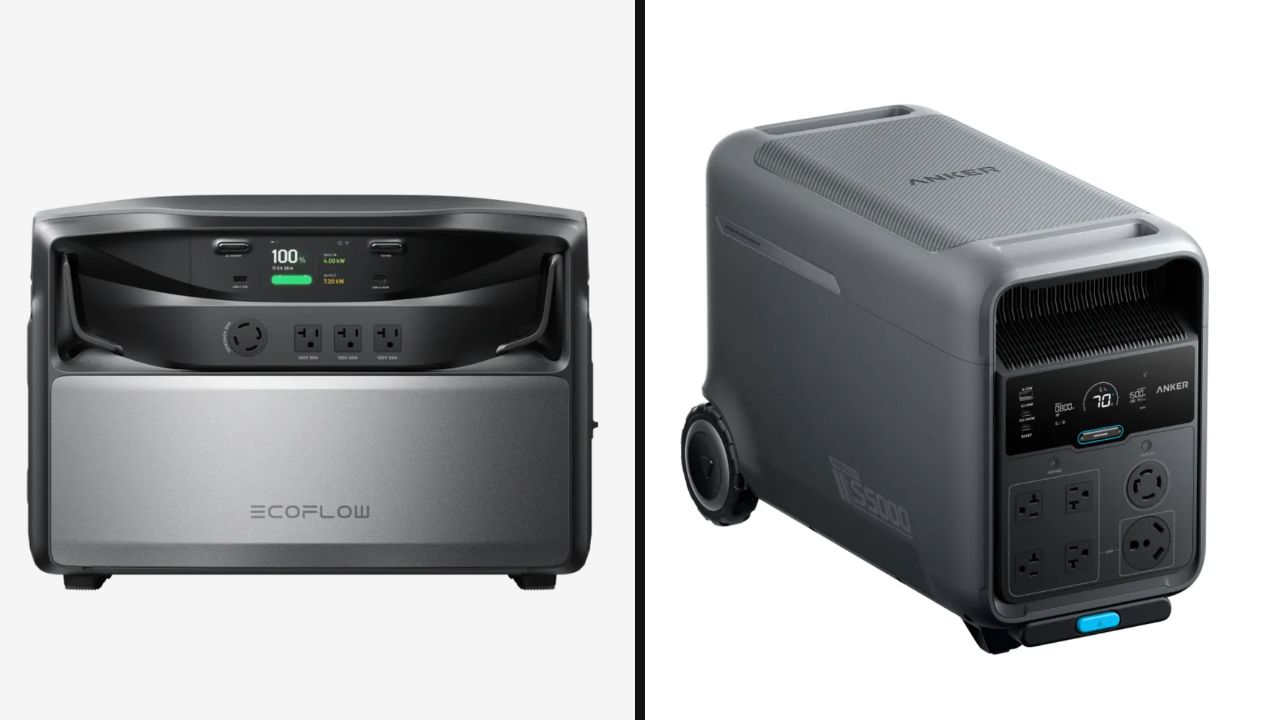
EcoFlow’s TITAN Series became available on October 13, 2026, with the TITAN 5000 Plus, the TITAN 5000, and the TITAN 5000 Classic. This comparison focuses on the TITAN 5000 and the Anker SOLIX S5000. The Anker is a wheeled portable station that goes on sale October 27. The TITAN is designed to pair with a Smart Home Panel 10 and a professional installation.
This comparison uses published specs from both companies. Runtime, efficiency, and lifespan figures are manufacturer claims, and we have not tested either unit yet. Where the sources disagree or leave a number out, we say so.
02The Short Answer
Where the Anker S5000 leads
- Lighter at 97 lb, with built-in wheels and a telescoping handle
- Lower launch price at $2,499.99, versus roughly $3,000 for the TITAN 5000
- Direct 120V and 240V outlets with no installation required
- Published charging and runtime figures to plan around
Where the EcoFlow TITAN 5000 leads
- Higher listed rated output at 7,200W, versus 4,500W for the Anker
- Designed for whole-home backup through a 10-circuit Smart Home Panel 10
- Switchover under 20 ms, versus 10 ms for the Anker, but across a whole-home system
- Can work alongside existing rooftop solar through AC coupling
The big thing to know: both of these units take a different approach. The S5000 powers the devices you plug into it, it’s mobile, and can be plugged into a home panel. The TITAN 5000 is meant to be stationary while backing up circuits in your home.
03Head-to-Head Specs
The table below uses figures from each company’s published materials. Where a number is missing or conflicting, it is marked as not confirmed.
| Spec | Anker SOLIX S5000 | EcoFlow TITAN 5000 |
|---|---|---|
| Battery capacity | 5,024Wh | 5,017.6Wh per unit, expandable to 30kWh |
| Battery cells | 314Ah LFP | 40160 tabless 2C LFP |
| Rated output | 4,500W | 7,200W |
| Peak output | 8,000W | Not confirmed |
| Voltage and outlets | 120V and 240V outlets, including L14-30R and TT-30R | 120V/240V split-phase, 3 × NEMA 5-20R and 1 × NEMA L14-30R, plus whole-home circuits via Smart Home Panel 10 (50A across 10 circuits) |
| Switchover time | 10ms | Under 20ms with Smart Home Panel 10 |
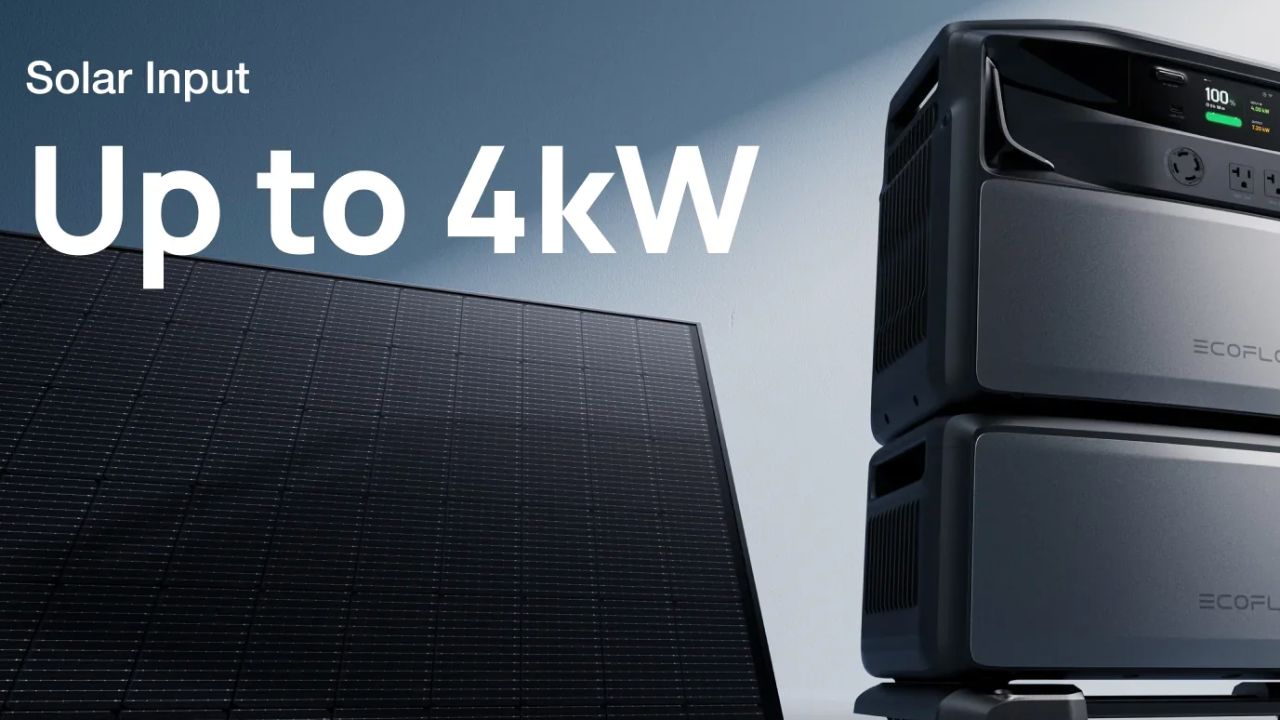
| Solar input | Up to 3,000W across two inputs | Up to 4kW (base model); the Plus model lists up to 8kW |
| Weight | 97 lb (about 44 kg) | 119.0 lb net (54 kg) |
| Dimensions | 10.6 × 22.0 × 15.2 in | 24.5 × 13.2 × 16.9 in |
| Warranty | 5 years | 5 years |
| Safety certifications | UL 9540, UL 9540A | UL 2743, UL 1973, UL 9540 (main units) |
| Availability | October 27, 2026 (US, AnkerSOLIX.com and Amazon) | Available from October 13, 2026 on EcoFlow’s website |
04Two Different Jobs
The S5000 is a portable unit. You roll it to where you need power, plug in appliances, and it works without a panel change. Anker says you can also connect it through a transfer switch or inlet box.
The TITAN 5000 is a home system. EcoFlow pairs it with the Smart Home Panel 10, which covers 10 circuits and manages grid, solar, and battery power together. That is more convenient for a whole house, but it adds installation and a higher total cost.
- Portable fit: the S5000 suits RVs, job sites, a garage, or backup for selected circuits.
- Whole-home fit: the TITAN 5000 suits homeowners who want backup on the circuits that run the house.
05Runtime and Efficiency Claims
Anker publishes specific runtime examples from its own testing. EcoFlow describes what its systems can run at once and does not give comparable runtime figures for the TITAN 5000 in the sources we reviewed.
| Claim | Anker SOLIX S5000 | EcoFlow TITAN 5000 |
|---|---|---|
| Combined household essentials | Up to 48 hours (fridge, router, coffee maker, lights, phone) | Not published as a runtime figure |
| Refrigerator alone | Up to 86 hours (700L fridge, 77°F room) | Not published |
| Window air conditioner | Up to 25 hours | Not published |
| Simultaneous loads | 4,500W rated total output | 7,200W rated output; EcoFlow’s press release describes the Plus model running a 3-ton central AC, refrigerator, TV, and lights together |
| Efficiency | Up to 96% at a 1,000W load (Anker testing) | Not published |
Anker says actual runtime depends on the connected devices and environmental conditions. EcoFlow notes that appliance coverage and runtime vary by configuration, load, and available energy. Treat both as starting points, not guarantees.
06Charging and Solar Input
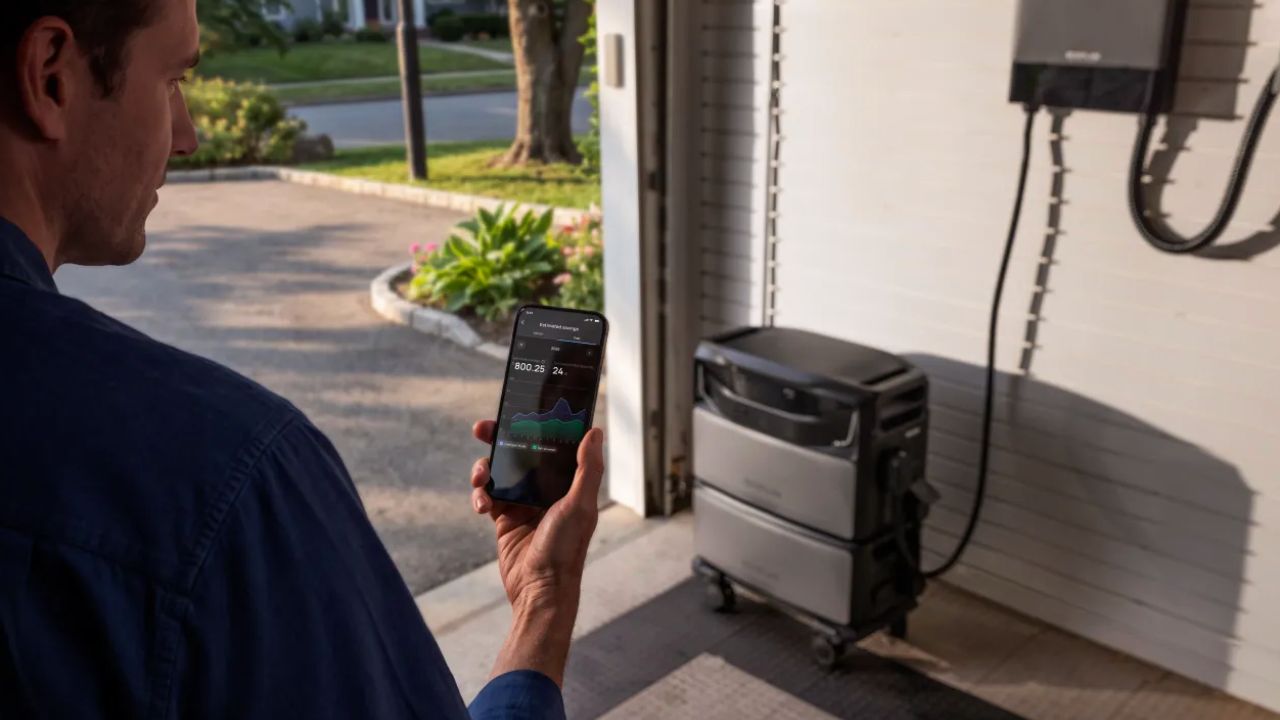
Charging speed matters if you need to recharge quickly after an outage. Anker publishes detailed charging figures for the S5000. EcoFlow’s grid charging specs for the TITAN 5000 were not confirmed in the sources we could access.
| Input | Anker SOLIX S5000 | Notes |
|---|---|---|
| 240V supply | Up to 4,500W | Zero to 100% in as little as 99 minutes (one source lists a 4,300W single-unit maximum) |
| 120V outlet | Up to 1,800W | The 99-minute figure applies to 240V only |
| Solar input | Up to 3,000W | Two inputs rated at 1,000W and 2,000W |
| TITAN 5000 solar input | Not applicable | Up to 4kW on the base model, paired with Smart Home Panel 10 for AC coupling |
For the TITAN 5000 Plus, EcoFlow lists up to 4kW of total solar input across two inputs. EcoFlow did not publish a grid charging rate for the base TITAN 5000 in the sources we reviewed.
07Battery and Lifespan
Anker rates the S5000 battery for 6,000 charge cycles before it drops to 80% of its original capacity, or 10,000 cycles before it drops to 60%. It estimates a service life of about 15 years at one to two cycles per day, and offers five years of product coverage.
EcoFlow describes the TITAN battery as using 40160 tabless 2C LFP cells and says the system scales from 5kWh to 30kWh in 5kWh steps. We did not find a published cycle-life rating for the TITAN 5000.
Read the lifespan claim carefully
Anker’s 15-year estimate assumes one to two cycles per day and a battery that still holds more than 60% of its capacity. It is a long-term projection and cannot be checked on the day you buy the unit.
08Installation and Safety
The two systems install very differently. The S5000 plugs into appliances or connects through a transfer switch or inlet box. The TITAN 5000 relies on the Smart Home Panel 10. EcoFlow says it pre-assembles breakers and pre-wires cables, which it claims reduces field labor by up to 80% and allows installation in as little as seven days, with about two hours of on-site work. That seven-day commitment has listed exclusions, including permit delays and severe weather.
Safety first
Never plug a portable power station or generator into a standard wall outlet to backfeed your house. That can send power back to the utility grid and put line workers at risk. For any permanent setup, have a licensed electrician install an approved inlet box, transfer switch, or home panel that meets your local code.
09Pricing and Offers
The Anker S5000 has a launch price of $2,499.99 against a list price of $3,599.99, with sales through Anker’s store and Amazon starting October 27. EcoFlow says the TITAN 5000 and TITAN 5000 Plus will be priced in the $3,000 range as standalone units and the $7,000 range with panel and installation. The Classic model is positioned lower, in the $2,000 range standalone. Additional pricing details are scheduled for November 3.
EcoFlow also says eligible TITAN Series orders placed from November 3 through December 31, 2026 can qualify for up to 12 months at 0% APR through approved financing providers, subject to credit approval. Eligible orders that include Smart Home Panel 10 installation also receive $300 off installation during the same window.
Conflicting value for Anker’s early-access offer
Anker’s launch coverage describes an early-access bonus package valued at $699, which includes an extended warranty and charging accessories. Notebookcheck and Gizmochina describe a discount pack that Anker values at $1,799 for customers who sign up before launch. Confirm the current offer on Anker’s product page before buying.
10Portability and Design
The S5000 weighs 97 lb and measures 10.6 × 22.0 × 15.2 inches, with built-in wheels and a telescoping handle. Anker’s own comparison calls it the smallest and lightest 5kWh power station in its class, based on selected competitors.
The TITAN 5000 is heavier and larger, at a 119.0 lb net weight and 24.5 × 13.2 × 16.9 inches. It is designed for a fixed home installation with the Smart Home Panel 10, so it is not meant to be moved like the Anker.
11Who Each One Suits
Choose the Anker SOLIX S5000 if you want
- A movable station for appliances, an RV, or a garage
- Direct 120V and 240V outlets with no installation
- A lower launch price and lighter weight
- Published runtime and charging figures to plan around
Choose the EcoFlow TITAN 5000 if you want
- Backup on circuits that run your home, through a home panel
- Higher listed rated output at 7,200W
- A system that can work with existing rooftop solar
- Expansion up to 30kWh in 5kWh steps
12Specifications
Specifications are from Anker’s published launch information and may change. Check the official product page before purchasing.
TITAN specifications come from EcoFlow’s product page and launch materials and may change. Confirm the exact model, weight, and price on EcoFlow’s page before purchasing.
13Common Questions
Can it run a refrigerator and lights at the same time?
Anker says a combined load of a refrigerator, Wi-Fi router, coffee maker, lights, and a phone ran for up to 48 hours on one charge in its testing. EcoFlow’s press release describes the Plus model running a 3-ton central AC, refrigerator, TV, and lights at once. Actual results will depend on your appliances.
Does it support 240V appliances?
Yes for the Anker. Anker says the S5000 supports both 120V and 240V appliances, with an L14-30R outlet for 240V loads. The TITAN 5000 reaches whole-home circuits through the Smart Home Panel 10 instead of a plug-in outlet, so confirm your panel and circuit requirements with an installer.
Can it work with existing solar?
The TITAN is designed to work with compatible existing rooftop solar when paired with the Smart Home Panel 10, using AC coupling. The S5000 accepts up to 3,000W of solar input across two inputs, which is a separate setup.
14Final Verdict
Our take
The Anker SOLIX S5000 and EcoFlow TITAN 5000 are both 5kWh-class systems, but they answer different questions. The S5000 is a wheeled station you can move wherever you need power. The TITAN 5000 is a home energy system that needs a panel and installation to back up your circuits.
If you need to power a few appliances during outages and want to start for less, the S5000 is the more practical choice. If you want your home’s circuits to keep running through a blackout, the TITAN 5000 is the better fit, but conf