Is the EcoFlow River 2 Max Still Worth It?
The EcoFlow River 2 Max first came out in late 2022, and EcoFlow has since released the newer River 3 series. I’ve used the River 2 Max for camping and as a plug-and-forget backup for when the lights go out. Here’s my honest take on whether it’s still a smart buy today.
01Quick Verdict
Not everyone needs a huge home battery. Sometimes you just want to keep the Wi-Fi on, the phones charged, and the freezer cold during a short outage. Or maybe you want a little extra power at the campsite. That’s exactly where the EcoFlow River 2 Max fits, and I’ll say it plainly: it’s one of the easiest entry-level power stations to recommend.
It has a 512Wh LFP (LiFePO4) battery rated for 3,000+ cycles and 500W of pure sine wave AC output, and it charges from empty to full in about an hour from a regular wall outlet. My favorite feature is the built-in UPS mode. Leave it plugged into the wall with your essentials plugged into it, and if the power goes out, it switches over to battery automatically. You don’t have to do a thing.
So is the River 2 Max still worth it? Yes, as long as you get it at a good price. The newer River 3 Max is quieter, switches over to battery faster in UPS mode, and can take extra batteries. But the River 2 Max still has more AC outlets, the same 220W solar input, and the same long-lasting battery chemistry. Now that it’s often marked down (especially on EcoFlow’s eBay store), it’s a great value.
02Pros & Cons
What I Love
- 0–100% charge from the wall in about 60 minutes
- Built-in UPS mode switches to battery in under 30ms
- Long-life LFP battery rated for 3,000+ cycles to 80%
- Light and compact at about 13 lbs
- 11 outputs, including 4 AC outlets and 100W USB-C
- X-Boost runs heating appliances up to 1,000W
- Up to 220W solar input
- App control over Wi-Fi and Bluetooth
- 5-year warranty
What Could Be Better
- 500W continuous output limits bigger appliances
- No expansion battery support
- UPS switchover (under 30ms) is slower than the River 3 series
- Fan can get loud (up to 62 dB) at high wattage
- Only 2 of the 4 AC outlets are grounded (3-prong)
The biggest catch: 512Wh is all you’ll ever get. The River 2 Max can’t take an extra battery, so it’s made for short outages and weekend trips. It won’t handle multi-day home backup.
03EcoFlow River 2 Max Specs at a Glance
04Is the River 2 Max Still Worth It in 2026?
This is the main question, so let’s tackle it head-on. The River 2 Max launched in late 2022 as part of the River 2 lineup, which moved EcoFlow’s small power stations over to LFP batteries. In 2024, EcoFlow released the River 3 series. The closest match to the River 2 Max is the River 3 Max, which is a River 3 Plus paired with a clip-on Extra Battery 300.
Here’s how they compare:
| Feature | River 2 Max | River 3 Max |
|---|---|---|
| Capacity | 512Wh | 572Wh (286Wh + 286Wh) |
| AC Output / X-Boost | 500W / 1,000W | 600W / 1,200W |
| AC Outlets | 4 | 3 |
| Max Solar Input | 220W | 220W |
| UPS Switchover | <30ms | <10ms |
| Noise | Up to 62 dB at high wattage | <30 dB (rated) |
| Expandable | No | Yes (up to 858Wh) |
| Design | Single unit | Two stacked pieces |
| Battery / Warranty | LFP, 3,000 cycles / 5 yrs | LFP, 3,000 cycles / 5 yrs |
The River 3 Max is the better product on paper, and I won’t pretend otherwise. If you plan to use your power station as a UPS for a desktop PC or NAS, the faster switchover is a real upgrade. It’s also much quieter, which matters if it’s running in your bedroom overnight.
The River 2 Max still holds its own where it counts for most entry-level buyers, though. It’s one simple box with four AC outlets, two DC barrel ports, the same 220W solar input, the same LFP battery life, and the same 5-year warranty. For camping, tailgating, and keeping the router, a freezer, and a few lights running during a short outage, those differences mostly don’t matter.
💡 My Take: Price is what decides it. If the River 2 Max is noticeably cheaper than the River 3 Max (and it often is, especially on EcoFlow’s official eBay store), it’s absolutely still worth buying. If they’re close in price, I’d spend the extra on the River 3 Max.
05Design and Ports
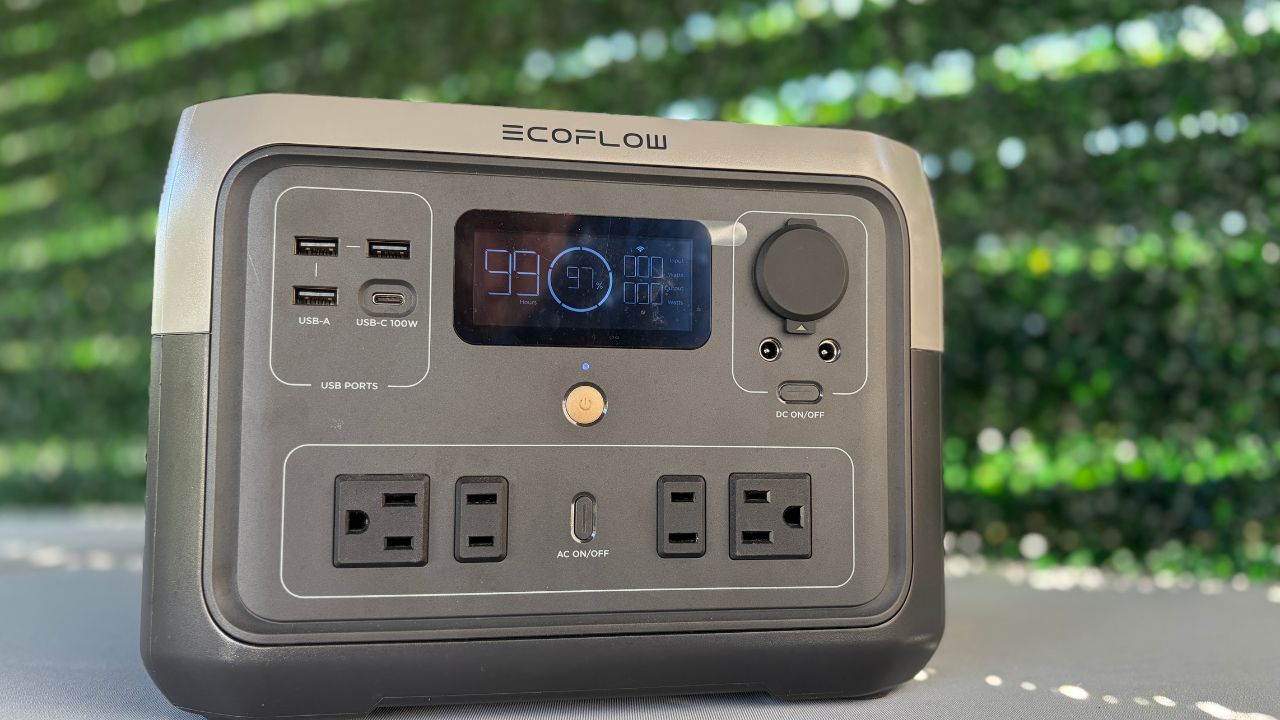
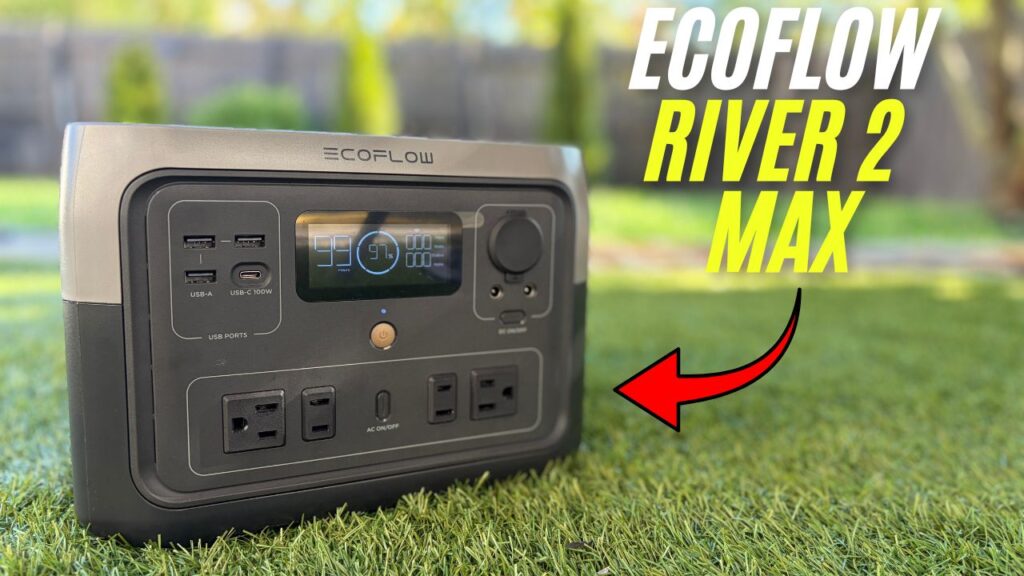
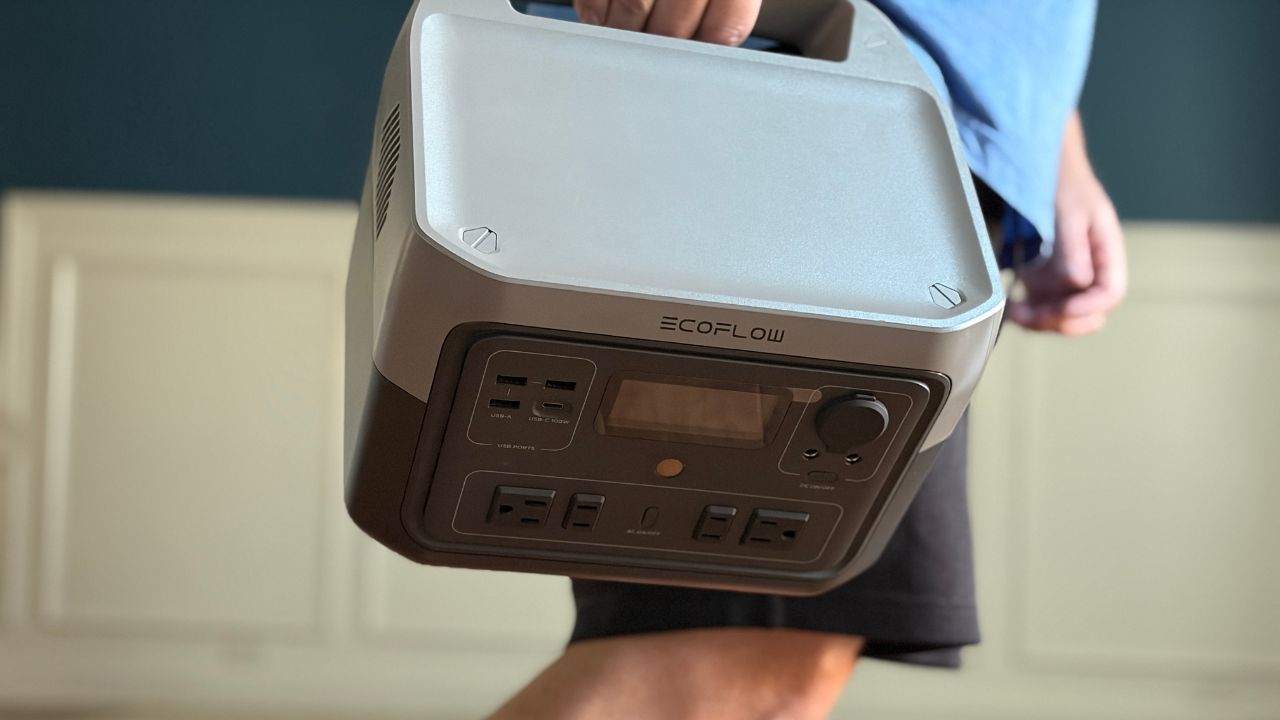
I love how simple the River 2 Max is to use. Everything is on the front. The USB ports are on the left: three USB-A and one 100W USB-C, which is enough to fast-charge most laptops without turning on the AC inverter. The LCD in the middle shows battery percentage, remaining runtime, and input and output watts at a glance.
The car outlet and two DC5521 barrel ports are on the right and have their own DC power button. The four AC outlets run along the bottom with a separate AC button. Two are 3-prong grounded and two are 2-prong. I keep the AC side off when I only need USB power, since running the inverter uses extra battery.
The handle is built into the back of the unit and sticks out a bit, so you can stack things on top or slide it onto a shelf without a handle getting in the way.
06Charging: Wall, Solar, and Car
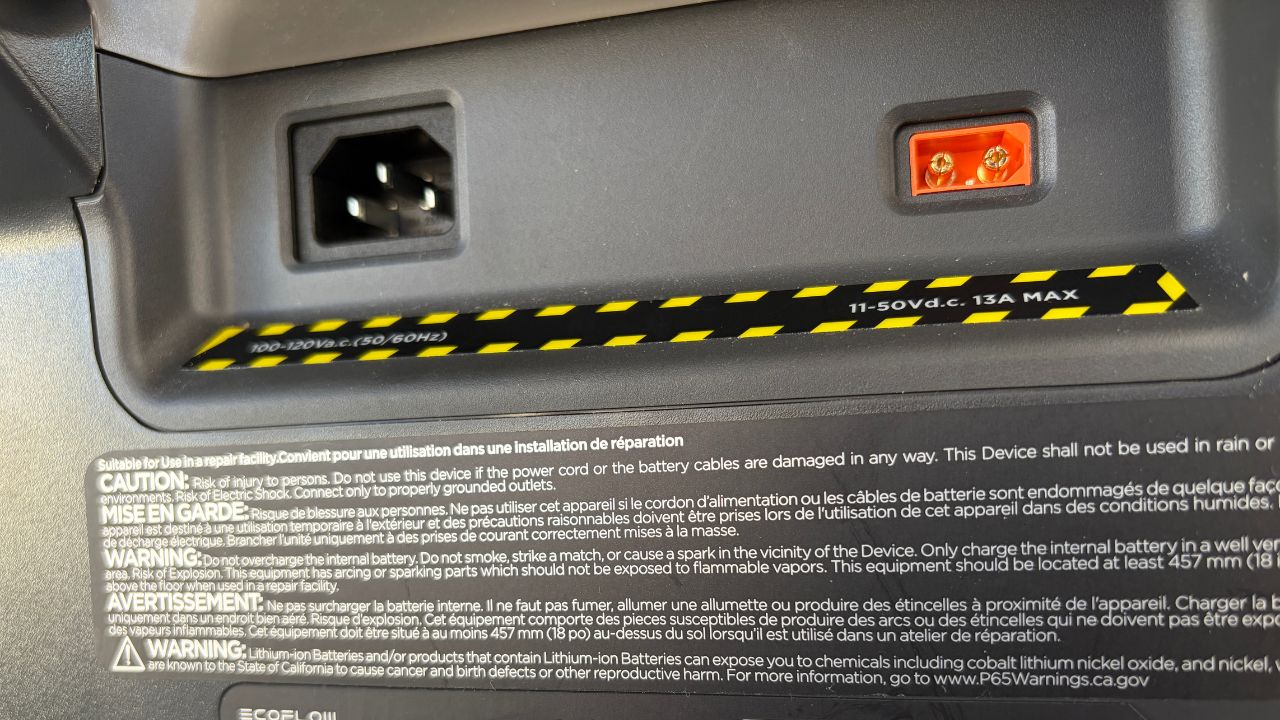
Wall charging is where the River 2 Max really stands out. EcoFlow’s X-Stream technology charges it from 0–100% in about an hour from a standard outlet. It uses a regular AC cord with no bulky power brick. If a storm is on the way, you can top it off while you get everything else ready. In the EcoFlow app, you can also slow the charge rate down for quieter, gentler charging when you’re not in a hurry.
Solar charging goes through the XT60i port on the back, which accepts 11–50V at up to 13A and 220W max. With a single EcoFlow 160W portable panel, expect a full charge in roughly four hours or more of good sun. Real-world solar is usually below the panel’s rating, so plan on some extra time.
Car charging through the 12/24V input tops out at 100W. That’s slow, but it’s handy for topping up between campsites. You can also charge it through the 100W USB-C port in a pinch.
07Built-In UPS: Power When the Lights Go Out
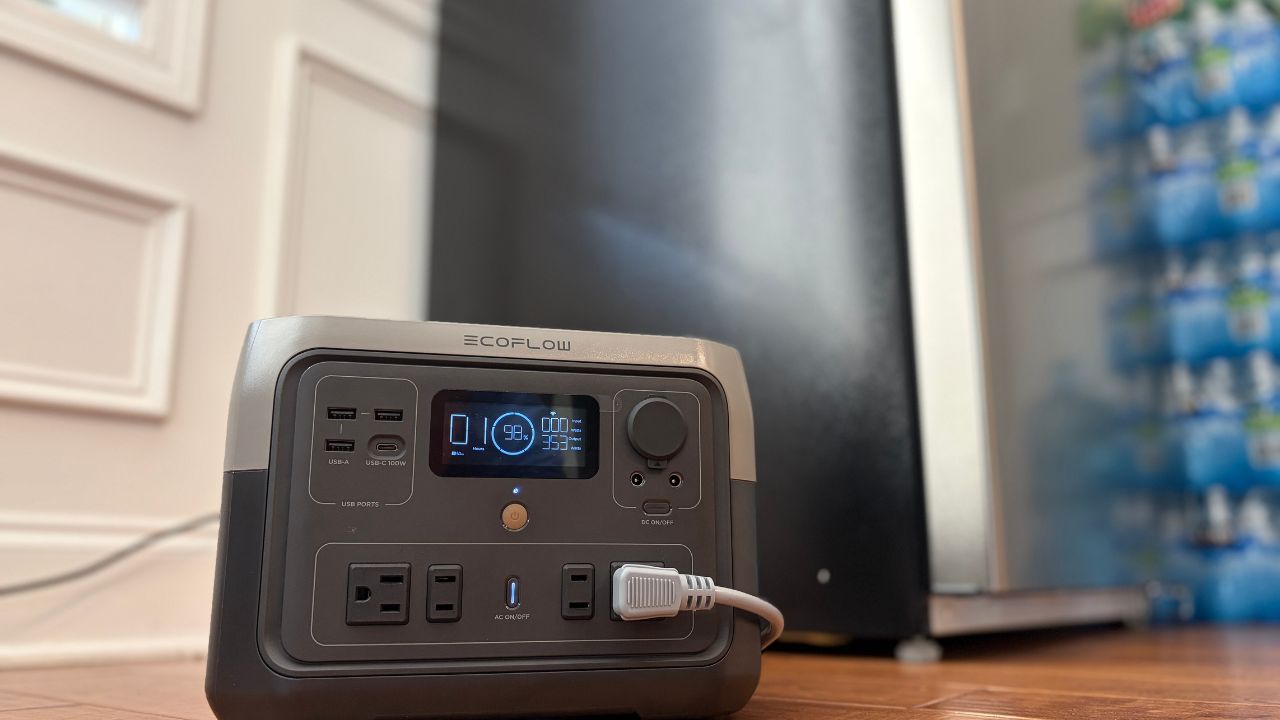
This is the feature that makes the River 2 Max so handy at home. It can work as an uninterruptible power supply (UPS), so it’s always ready for an outage without any effort on your part.
The setup is simple. I plug the River 2 Max into a wall outlet, then plug my deep freezer into one of its AC outlets. While the grid is up, wall power passes straight through to the freezer and keeps the battery topped off. When the power goes out, the River 2 Max switches to battery in under 30 milliseconds. That’s fast enough that the freezer never notices. Nobody has to run to the garage with a flashlight to swap plugs. When the power comes back, it switches back to wall power and recharges itself.
That’s what makes it such a good fit for short outages. A freezer, a Wi-Fi router and modem, a few lamps, or a CPAP machine can all sit on the River 2 Max full-time, and they’ll just keep running when the lights go out.
💡 My Tip: Keep the total load on the River 2 Max under 500W so it can carry everything when it switches to battery. Also turn on the AC output button. Your devices only get power if the AC output is switched on, even while it’s plugged into the wall.
How long it lasts on battery depends on what you plug in. Converting battery power to AC always loses some energy, so you won’t get the full 512Wh out of the AC outlets. These rough estimates assume about 85% efficiency (around 435Wh usable):
| Device | Typical Draw | Est. Runtime |
|---|---|---|
| Wi-Fi router + modem | ≈15W | ≈29 hours |
| CPAP (no humidifier) | ≈40W | ≈10 hours |
| 32″ LED TV | ≈50W | ≈8.5 hours |
| Laptop | ≈60W | ≈7 hours |
| Chest freezer (avg. while cycling) | ≈60W | ≈7 hours |
| Electric kettle (X-Boost) | ≤1,000W | Works at reduced power |
Heads-Up: UPS Limits and X-Boost
The under-30ms switchover is fine for freezers, fridges, routers, lights, and most electronics. It isn’t as fast as a dedicated online UPS, though, so some desktop PCs and NAS units may reboot during the switch. Test yours before relying on it.
X-Boost lets the River 2 Max run heating appliances rated up to 1,000W, like kettles and hair dryers, by lowering the voltage. They’ll work, just at reduced power. It doesn’t help motors or compressors that need more than 500W to run.
08Portability and Build Quality
At about 13.4 lbs, the River 2 Max is easy to carry with one hand. I grab it by the handle and carry it from the house to the car or from the car to the campsite without thinking twice. It fits nicely behind a car seat or in the corner of a tent.
The build feels solid, with a sturdy plastic shell and a clean, modern look that doesn’t seem out of place sitting in the living room. The flat top also works as a small shelf for a phone or lantern.
09The EcoFlow App
The EcoFlow app connects over Wi-Fi or Bluetooth. From my phone I can check the battery level, turn outputs on and off, set charge and discharge limits, and adjust the AC charging speed. It’s simple and reliable, and it’s the same app I use for my larger EcoFlow units.
When I’m using it as a UPS, I like being able to check the battery level from anywhere in the house. During an outage, it’s nice to glance at my phone and see how much runtime is left without walking out to the garage.
10What About Noise?
With light loads, the River 2 Max is quiet. When it’s fast charging or running something power-hungry, the fan kicks on, and EcoFlow says it can reach up to 62 dB at high wattage. That’s about as loud as a normal conversation. If you’re using it in a bedroom overnight, lower the AC charging speed in the app. This is one area where the newer River 3 series is clearly better.
11Save Money: Buy It From EcoFlow’s Official eBay Store
My Money-Saving Pick
Before you buy, check the EcoFlow River 2 Max on EcoFlow’s official eBay store. Prices there are often dramatically lower than retail, and since it’s EcoFlow’s own store, the units are still backed by EcoFlow’s warranty.
EcoFlow also sells certified refurbished units there, which are inspected and tested before they ship. Check the warranty details on each listing before you buy, since terms can vary between new and refurbished units.
For a power station that may sit on a shelf until the next outage or camping trip, buying from the eBay store is one of the smartest ways to get into the EcoFlow ecosystem for less.
12Who Should Buy the EcoFlow River 2 Max?
👍 Great For
- First-time power station buyers who want something simple
- Campers, tailgaters, and road trippers
- Plug-and-forget UPS backup for a freezer, router, or lights during short outages
- CPAP users who need one night of backup
- Budget shoppers who find it on sale or refurbished
👎 Skip It If
- You need multi-day or whole-home backup
- You want to add expansion batteries later
- You need to run appliances like microwaves, well pumps, or window AC units
- You need a near-instant UPS for a desktop PC or NAS
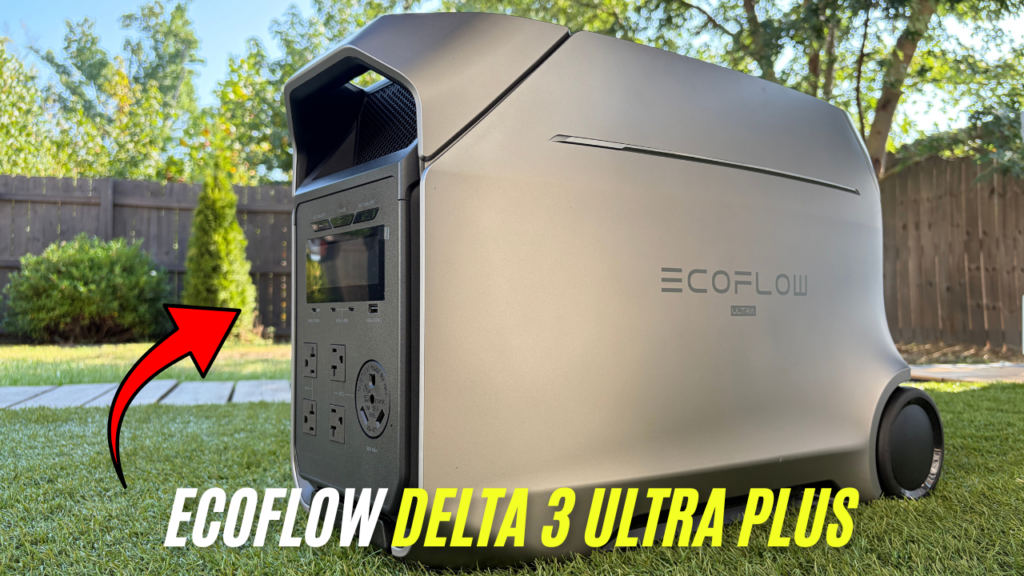
If you need serious home backup instead, check out my EcoFlow Delta 3 Ultra Plus review. It’s a much larger system built for running home circuits through long outages.
13Frequently Asked Questions
Is the EcoFlow River 2 Max still worth buying in 2026?
Yes, if the price is right. It still has a long-life LFP battery, 1-hour charging, built-in UPS mode, and a 5-year warranty. The newer River 3 Max is quieter, has a faster UPS, and can expand, so only pick the River 2 Max if it’s noticeably cheaper.
Can the River 2 Max work as a UPS?
Yes. Plug it into the wall and plug your devices into it. If the power goes out, it switches to battery in under 30ms. That’s fast enough for freezers, fridges, routers, lights, and most electronics.
Can the River 2 Max run a refrigerator or freezer?
Yes, most standard fridges and chest freezers will run on it, as long as their running draw stays under 500W. It’s a great way to keep food cold through a short outage.
Can I add an extra battery to the River 2 Max?
No. The River 2 Max doesn’t support expansion batteries. If you think you’ll need more capacity later, consider the River 3 Max or a larger Delta series unit.
How long does it take to charge with solar?
The River 2 Max accepts up to 220W of solar. With EcoFlow’s 160W panel, a full charge takes roughly four hours or more in good sun. Clouds and panel angle will slow it down.
14Final Verdict
Ready to Grab a River 2 Max?
The River 2 Max is still a smart, simple pick for camping trips and short power outages. It charges in about an hour, runs as a plug-and-forget UPS, and has a long-life LFP battery and a 5-year warranty. Grab it at a good price and you won’t regret it.